Namibia
Discover
Where endless deserts meet wide open skies, with wildlife all around

Namibia
Drive through wide open landscapes, climb red sand dunes and fall asleep under star-filled skies. From remote deserts to wildlife encounters far away from the crowds. Namibia feels untouched, quiet and endlessly impressive.
Language: English, Afrikaans
Currency: Namibian dollar
Capital: Windhoek
-
Namibia is a country defined by space. Big landscapes, long roads and a feeling of freedom that’s hard to find elsewhere. From endless deserts to open savannah and rugged mountains, the scenery is constantly changing but always impressive.
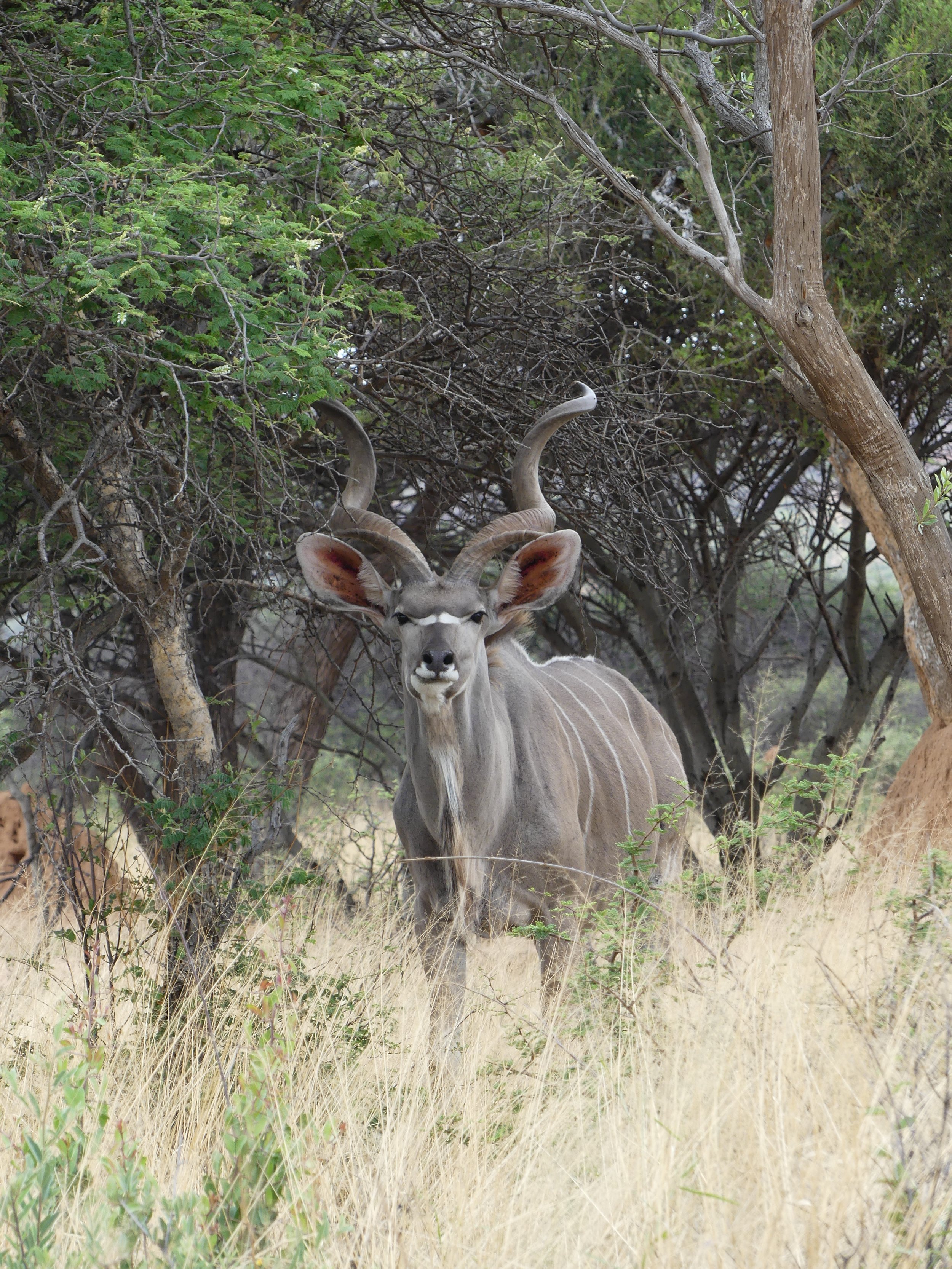
With just over 2.5 million people, Namibia is one of the least densely populated countries in the world, and it never feels busy. You’ll often drive for hours without seeing another car, sharing the road with giraffes, zebras or springboks instead. Wildlife here moves freely through national parks and communal land, and spotting animals often feels natural rather than staged.
Namibia is home to some iconic places. The Namib Desert is the oldest desert in the world, with massive red sand dunes. Etosha National Park is one of the best places to see wildlife, especially around its waterholes where animals gather throughout the day and night. Along the coast, the desert meets the Atlantic Ocean, creating a completely different landscape again.
Travel here is simple yet extremely rewarding. Camping under the stars, cooking your own meals and driving long distances are all part of the experience. People are friendly and welcoming, and there’s a strong sense of respect for the land and nature.
Namibia isn’t about rushing from highlight to highlight. It’s about being on the road, watching the landscape unfold and appreciating how quiet and open everything feels.
-
The best way to travel around Namibia is by car. Distances are big, public transport is limited, and the journey itself is a huge part of the experience. Long drives through wide-open landscapes over gravel roads with the chance to spot wildlife along the way, driving in Namibia is anything but boring.
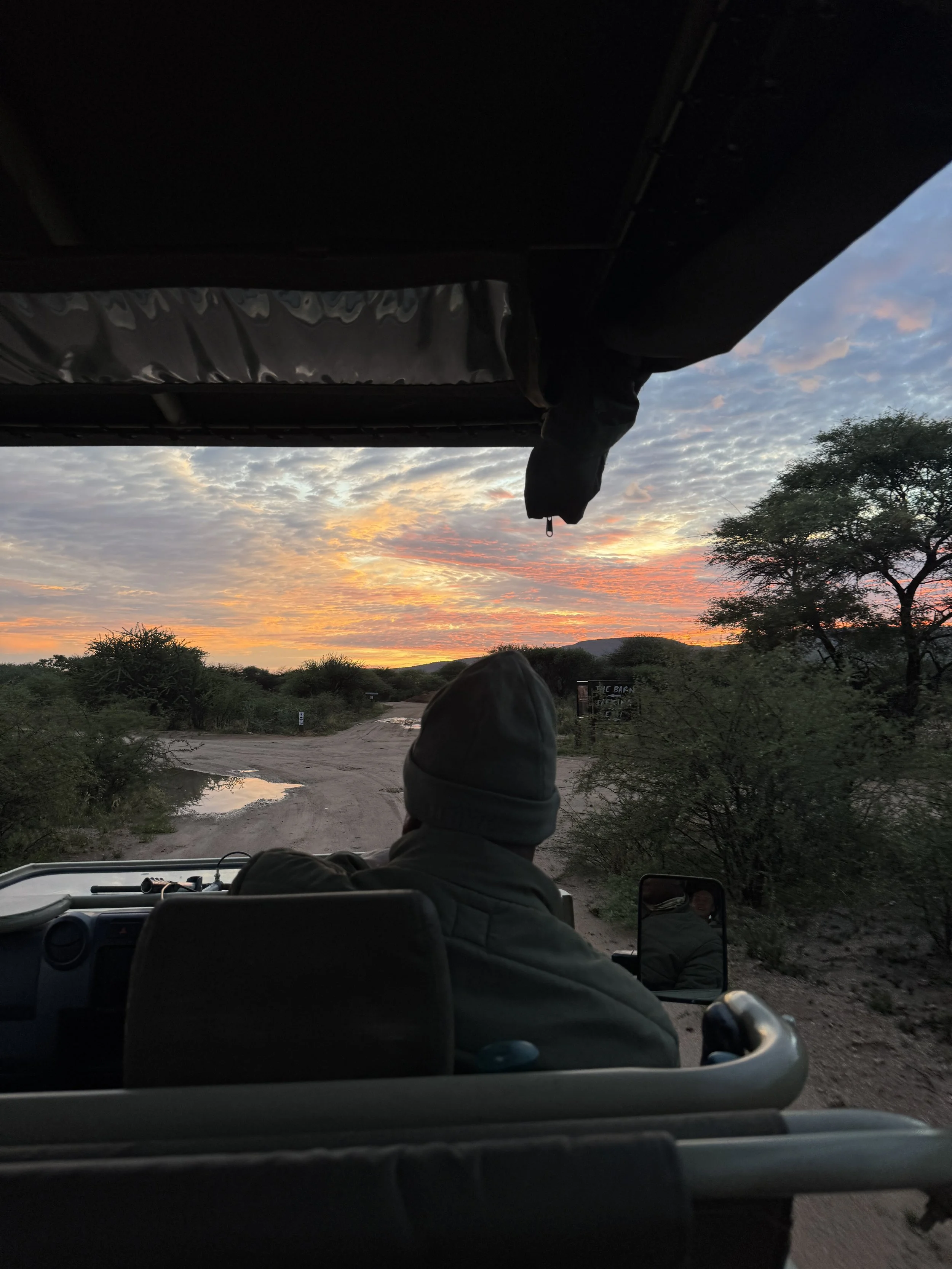
We rented a 4×4 with a rooftop tent and would highly recommend it. It gives you complete freedom to move at your own pace, stop where you want and stay in some of the most beautiful, remote places in the country. Waking up in the middle of nature, often with very little people around, truly adds something special to the trip.
It’s also possible to rent a regular car and stay in lodges, which is a great option if camping isn’t your thing. Keep in mind that this usually comes at a higher cost, and for us, camping under the stars made the Namibia adventure even more special.
Keep reading to find out where to rent a car like this.
-
For the route described below, I recommend taking at least three weeks. Distances in Namibia are long, and driving is a big part of the journey. Roads are often gravel and sometimes pretty rough, which means everything simply takes more time. Rushing through this country would be a shame, Namibia is best experienced slowly.
That said, if you don’t have three weeks, don’t worry. Even with less time, you can still see and experience a lot. Pick a shorter route, focus on one or two regions, and you’ll still get a great feel for the landscapes, wildlife and sense of space that make Namibia so special.
-
Namibia can be visited year-round, but when you go really depends on what you want from the trip.
The dry season runs from May to November. Wildlife is easier to spot as animals gather around waterholes and the bushes aren’t too thick. Days are hot, and nights, especially in the desert, can get quite cool.
The wet season runs from December to April, with most rain between December and March. Rain showers are usually short, and the landscape turns green and lush. Baby animals appear, birdlife is abundant and even if wildlife is more spread out, it’s a beautiful time to visit.
We went in mid-November and loved the mix of warm days, clear skies, greener landscapes and young animals. We had a few occasional showers towards the end of our trip, but that’s all part of the charm of travelling at the start of the wet season.
If wildlife spotting is your priority, aim for the dry months. But if you prefer fewer crowds, greener scenery and lower prices, the rainy season has its own appeal.
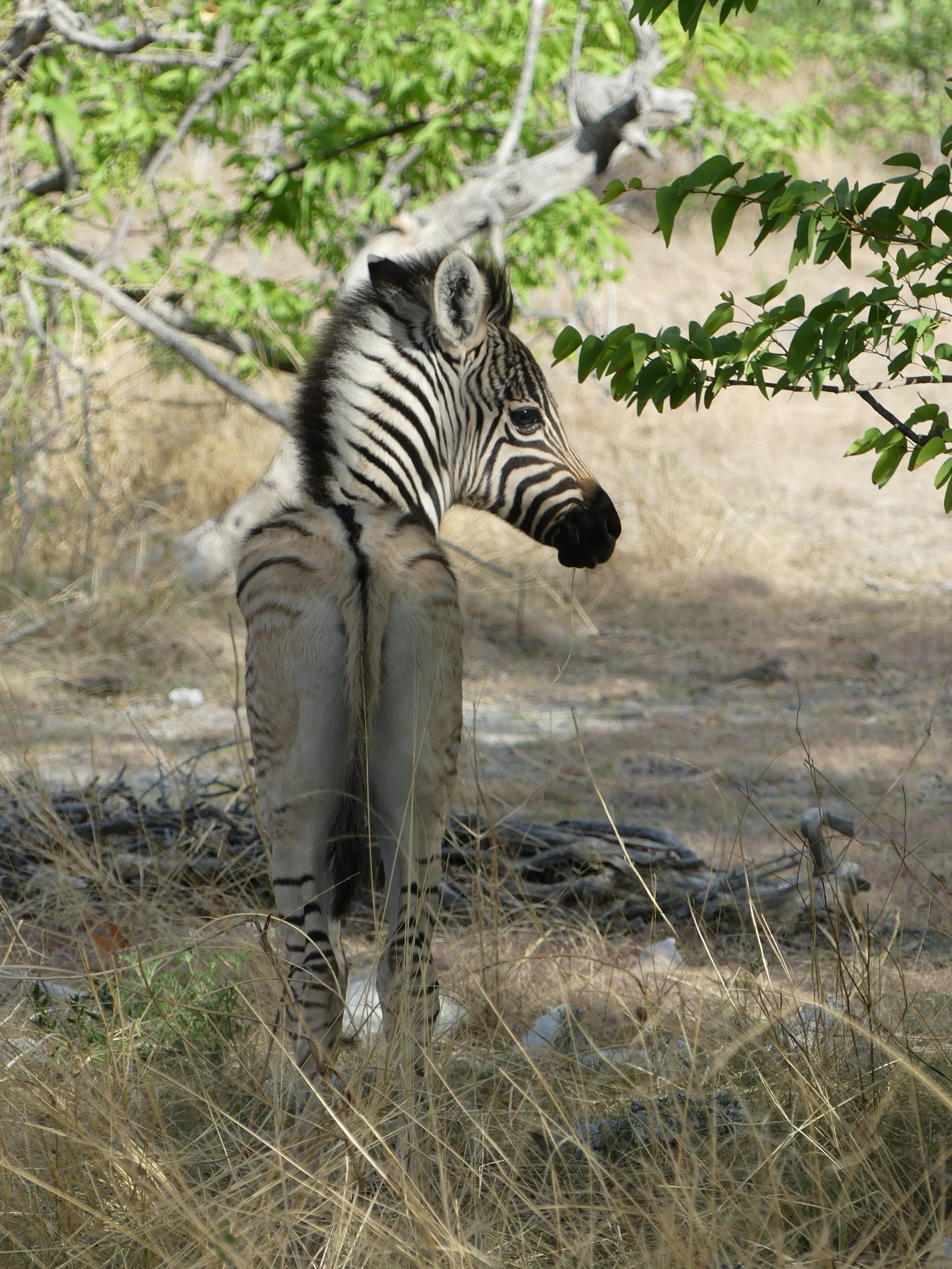
Renting a 4x4 with rooftop tent
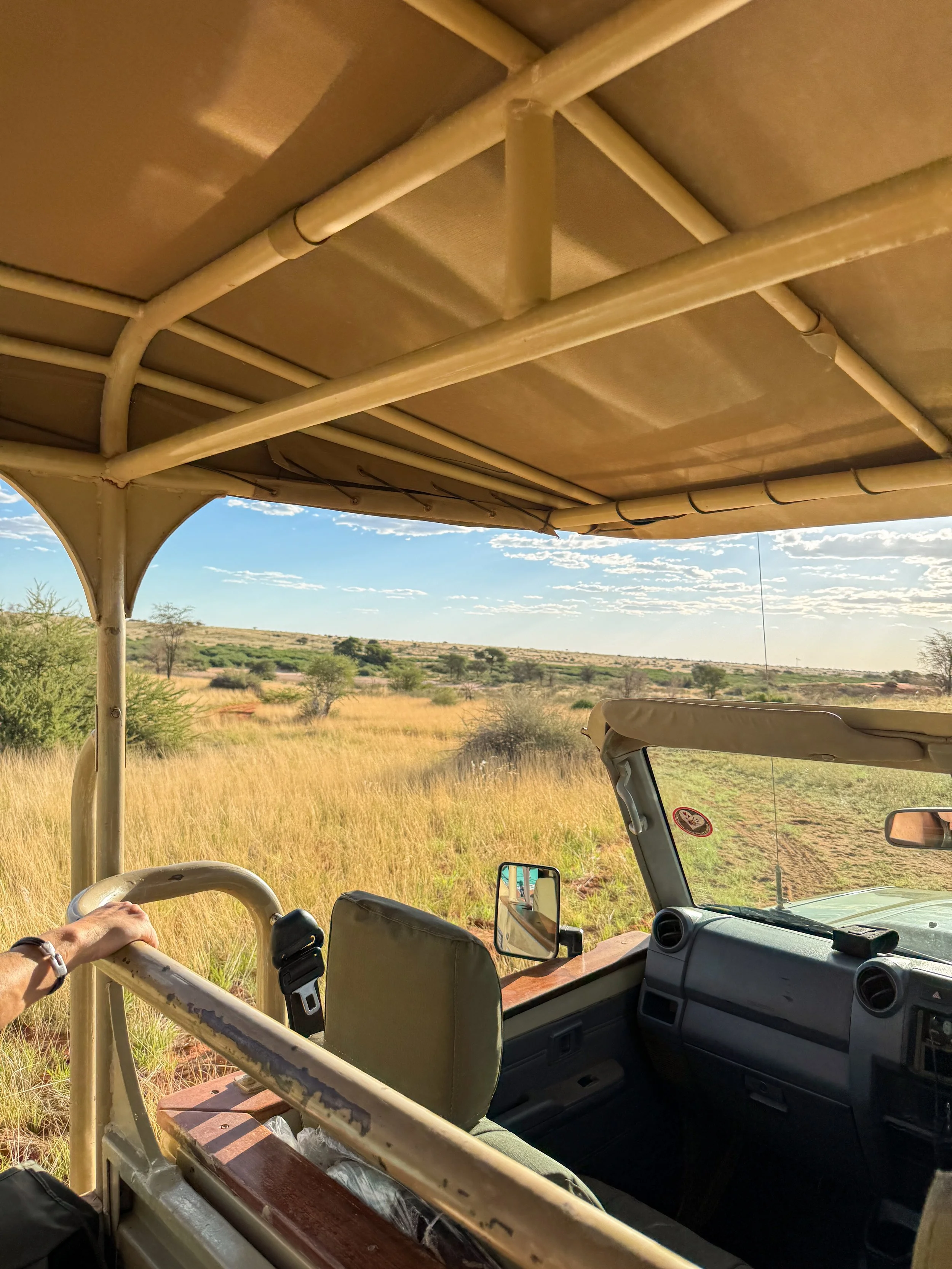
Camping with a 4×4 with a rooftop tent had been on my bucket list for a while, and honestly, it turned out to be the best possible way to experience Namibia. Distances are long, landscapes change constantly and having your own vehicle gives you complete freedom. You decide when to stop, where to sleep and how long to stay. You’ll fall asleep under a sky full of stars, surrounded by nature, far away from anything and that’s exactly what makes it so special.
We rented our 4×4 with rooftop tent through Sekretar Car Rental, and I can genuinely say I’d recommend them without hesitation. The car was in perfect condition and fully equipped with everything we needed: camping gear, a fridge, kitchen supplies and all the practical essentials for life on the road. It made travelling and camping feel easy and comfortable, even in remote places.
What really stood out, though, were the people behind Sekretar. From the first contact, long before our trip even started, they were incredibly helpful, kind and welcoming. They took the time to answer questions, share tips and think along with our route and plans. Even during the trip, they were always available if we needed anything. That personal approach made a big difference and honestly added a lot to the overall experience.
If you’re thinking about exploring Namibia by car doing it in a 4×4 with a rooftop tent gives you a sense of freedom that fits the country perfectly. And if you’re looking for a reliable rental with great service, Sekretar Car Rental is one I’d wholeheartedly recommend.
Preparing for
your Namibia
adventure?
Planning your Namibia road trip? Find all the practical tips you need before hitting the road here. From camping and fuel to packing, groceries and everything we wish we knew before our adventure.
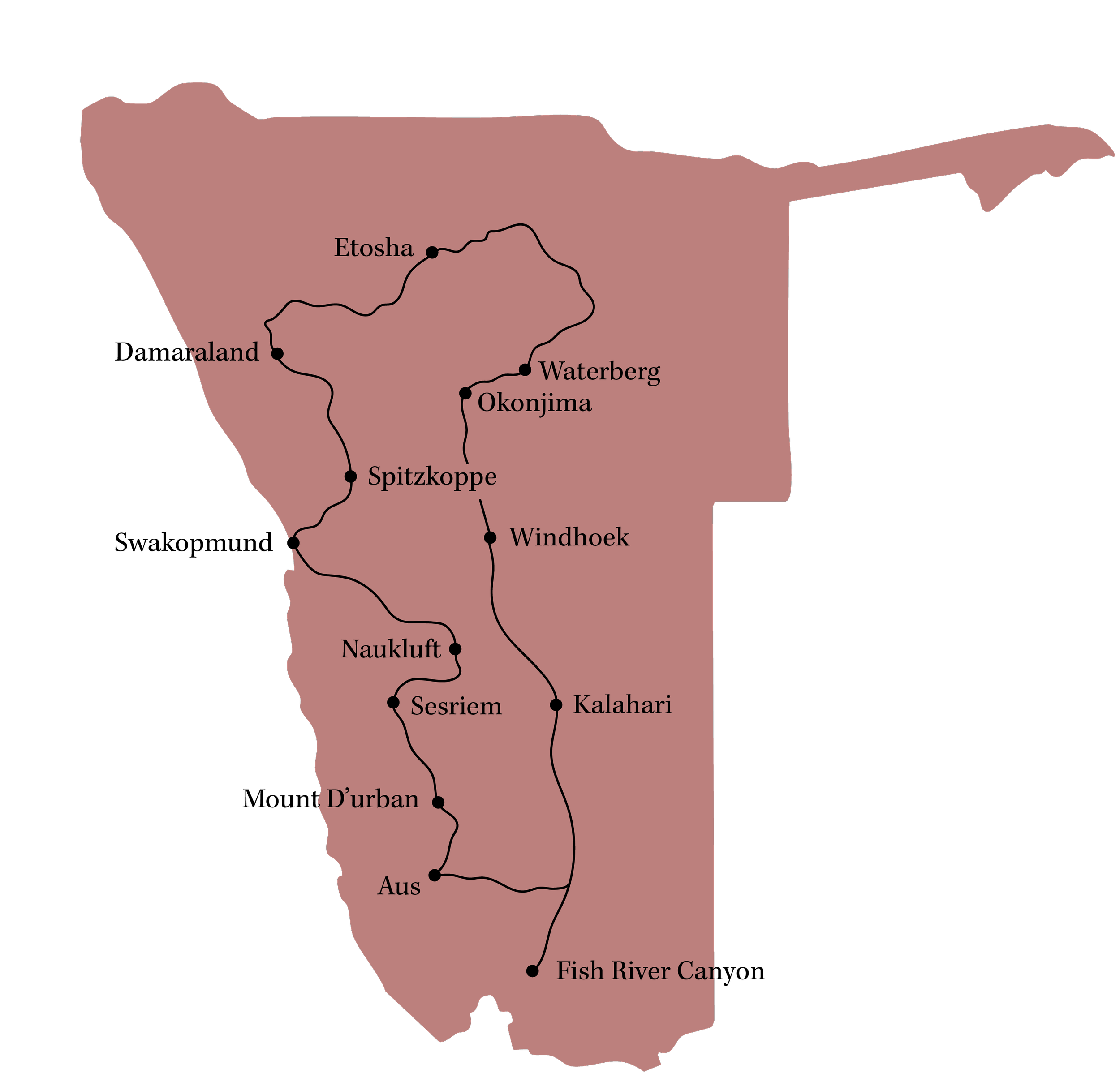
Travel route
Windhoek
Windhoek is Namibia’s capital and the starting point of most road trips through the country. The city is easy to navigate and perfect for picking up a 4x4, stocking up on groceries and an introduction to Namibia and its culture and people.
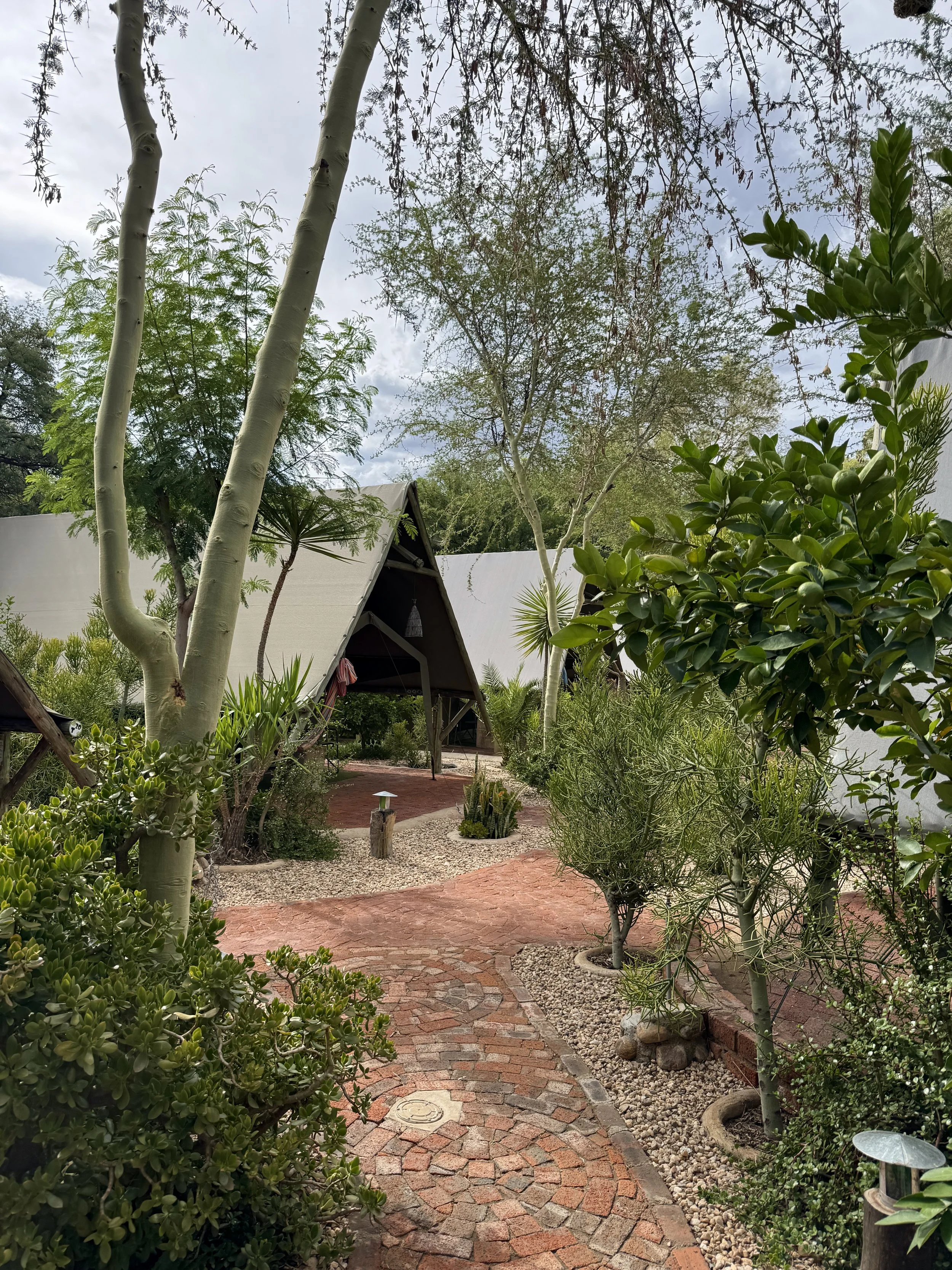
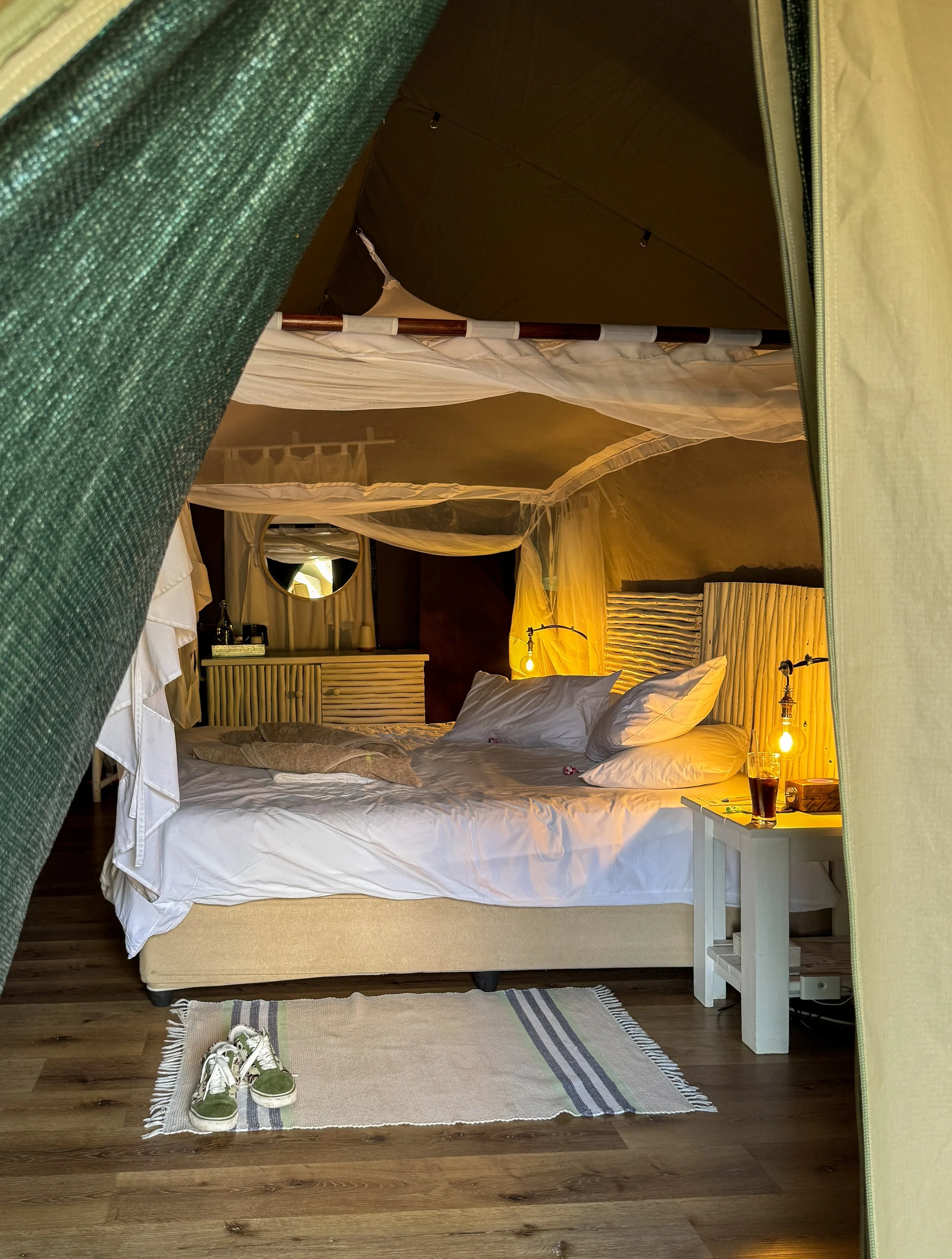
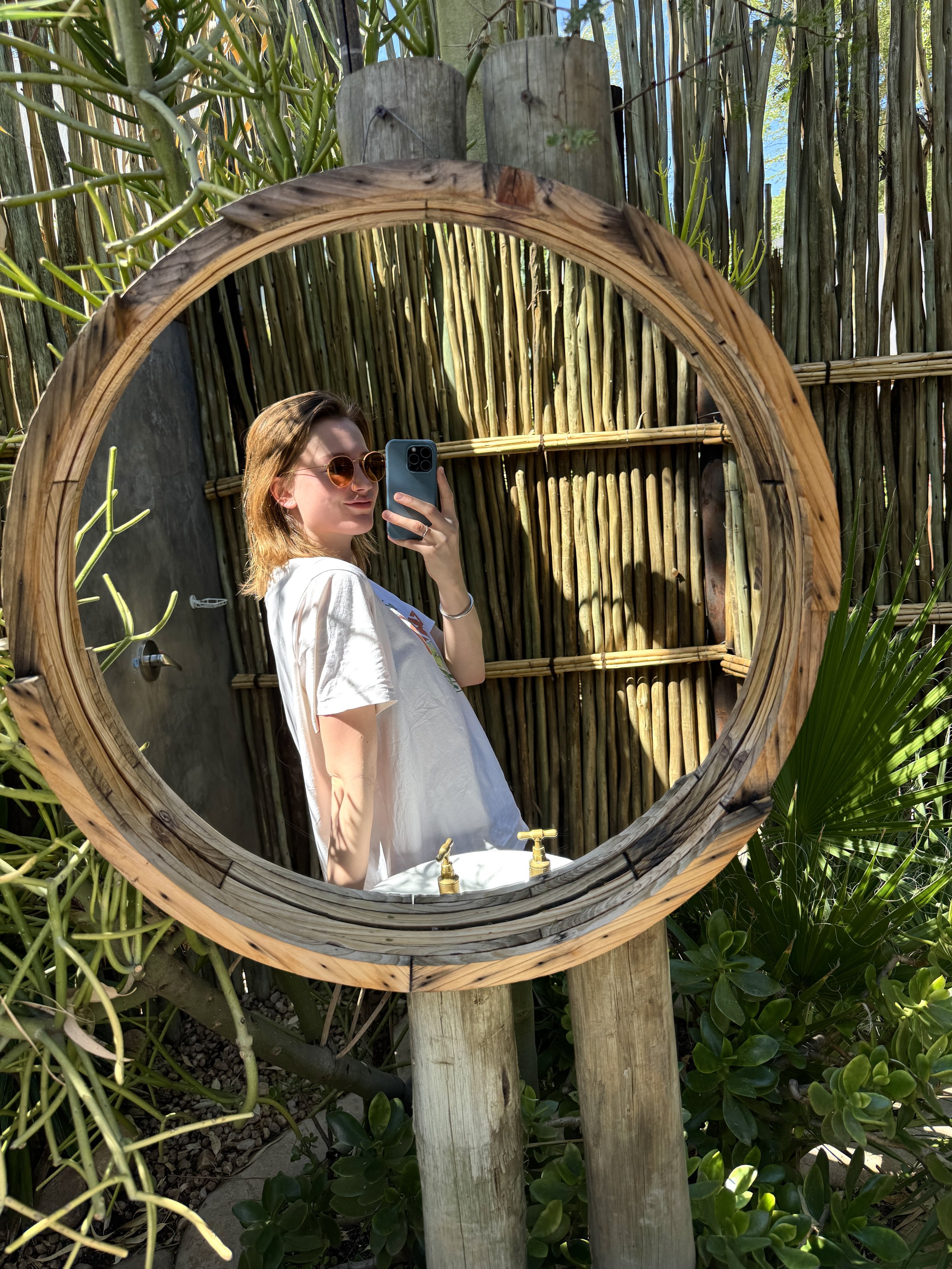
Urban Camp is a great place to spend the first night. The glamping tents are very comfortable and well equipped, making it an ideal way to ease into camping before heading deeper into the country. It’s centrally located, calm and a very cosy place to have a drink or meal too. It offers a great transition from city life to the open landscapes ahead.
One night here is more than enough. While Windhoek has its charm, most of Namibia’s beauty lies outside the city. Once you leave Windhoek behind, the roads grow quieter, the space opens up and the journey truly begins.
Don’t miss
Glamping at Urban Camp
The perfect way to start the journey. A peaceful, green spot tucked away in the streets of Namibia’s capital. The atmosphere is relaxed and welcoming, with friendly staff and a laid-back feel. It’s also a great place to stop for a drink or a meal, with breakfast, lunch and dinner served on site.
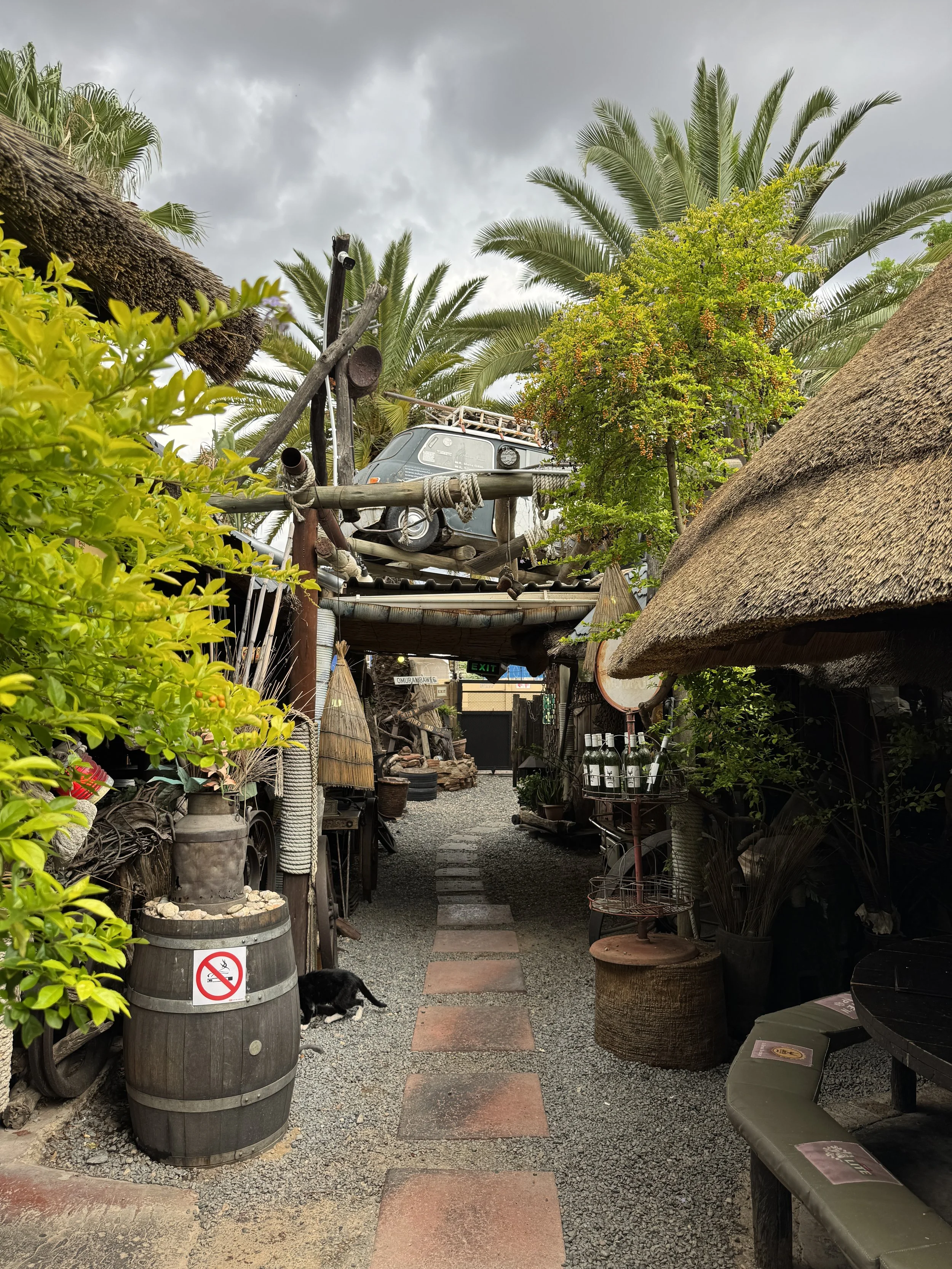
A visit to Joe’s Beerhouse
A well-known spot in Windhoek and a nice place to experience local flavours (and beers :)). Joe’s Beerhouse has a lively and social atmosphere and is a popular place for dinner before heading out on the road.
Kalahari
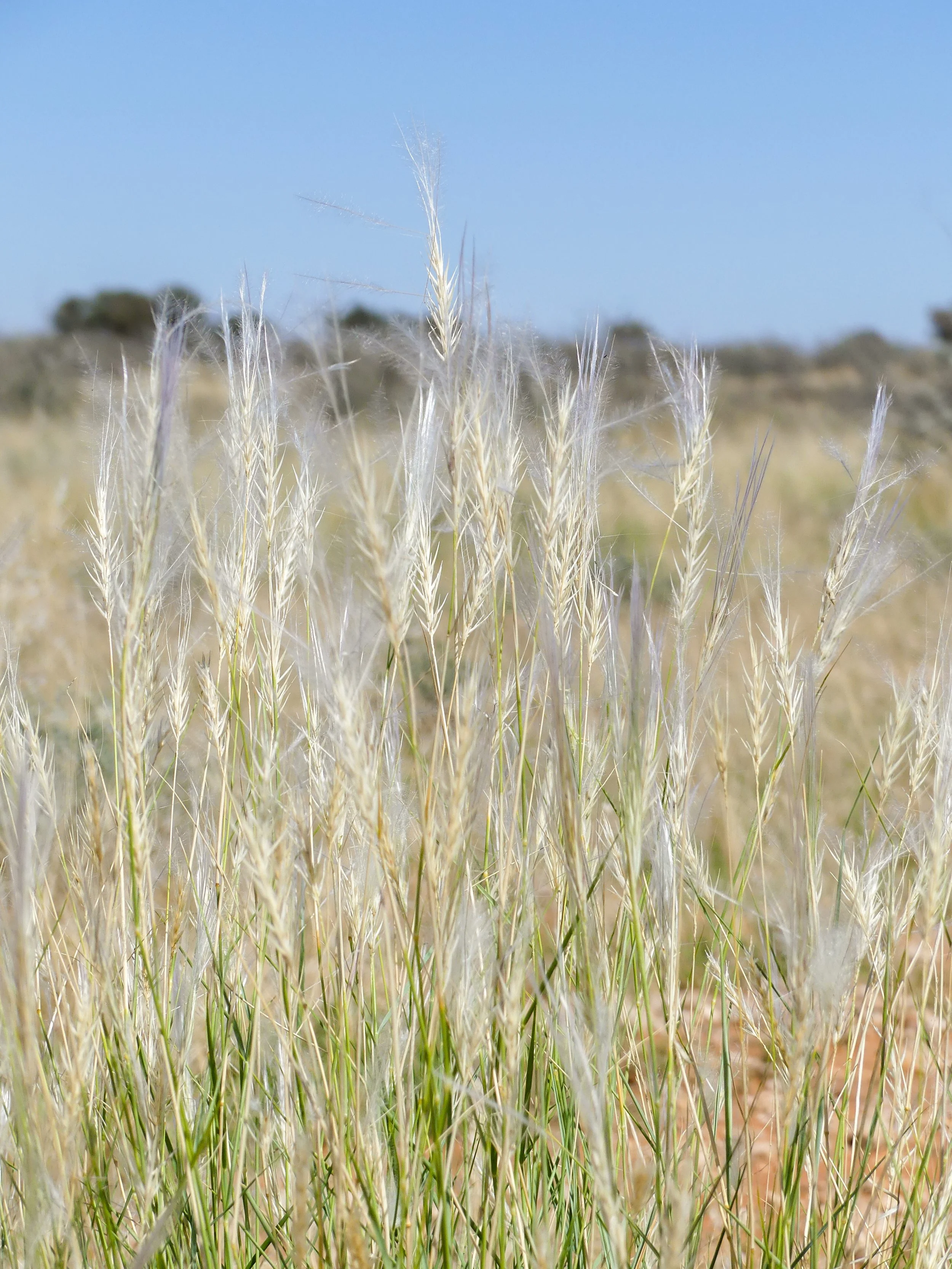
From Windhoek, the road leads south into the Kalahari. A desert of red dunes and wide open plains. The Kalahari stretches across roughly 900,000 square kilometers, covering parts of Namibia, Botswana and South Africa.
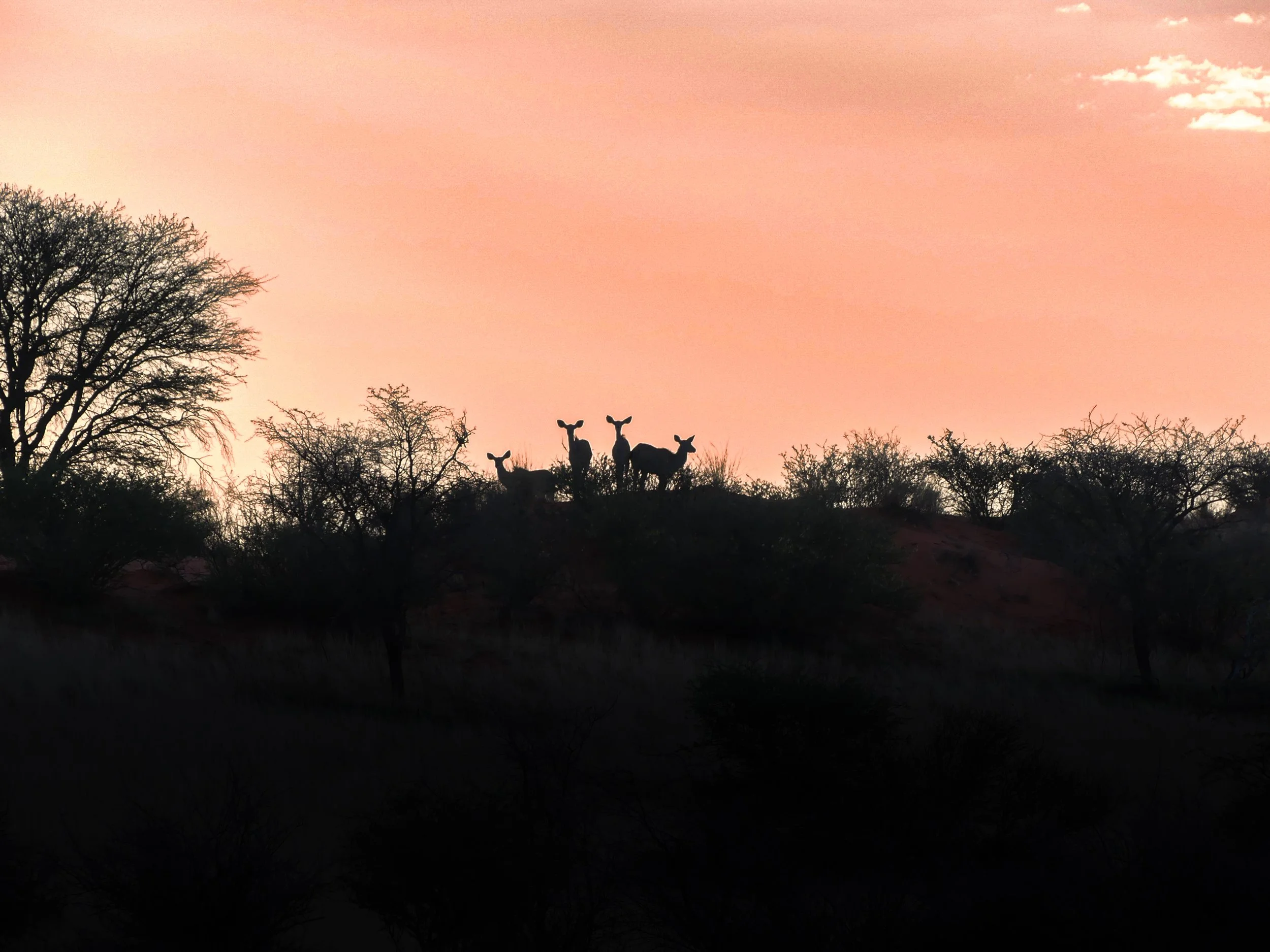
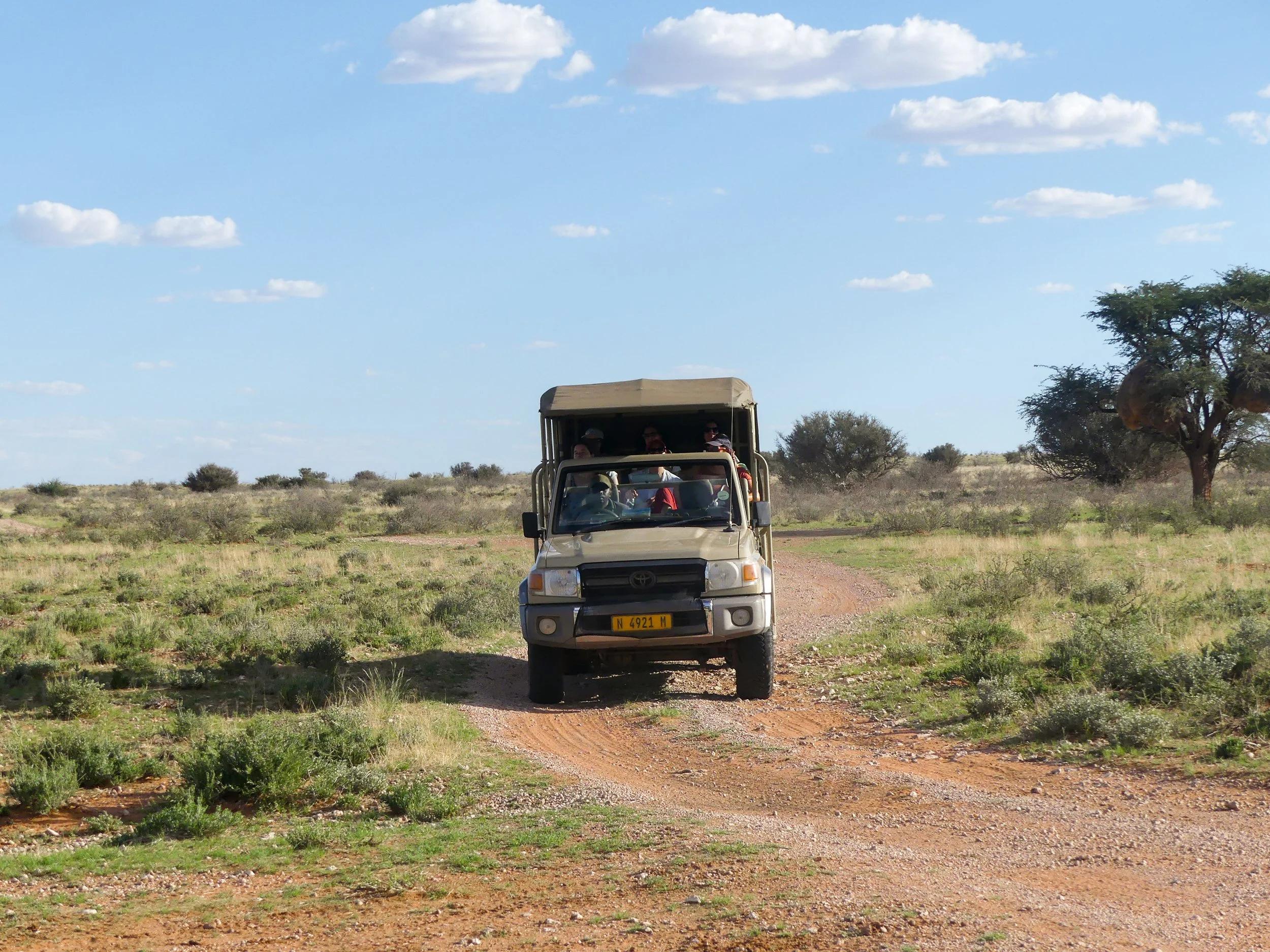
Staying at Kalahari Anib, tucked into a protected nature reserve, offers a first real encounter with Namibia’s wildlife. Morning walks reveal animals up close (springbok, zebra, giraffes, ostriches and more) while the heat slows the day, making afternoons perfect for resting before heading back out.
Late-afternoon drives bring the landscape to life as the sun softens and wildlife becomes more active. Ending the day with a sundowner on the red dunes, surrounded by open views, is the perfect moment to enjoy the beauty of the Kalahari.
Campsite: Kalahari Anib Campsite
Don’t miss
A sundowner tour
A guided sundowner tour through the red dunes, spotting zebra, giraffes and ostriches along the way. Learn about the desert and its wildlife before stopping at a quiet spot as the sun goes down. With a drink in hand and some snacks nearby, the desert glows in warm evening light. The tour can be booked directly at the lodge, making it an easy addition to a stay in the Kalahari.
The selfguided hiking trails
The area offers several self-guided walking trails, a fun way to explore the Kalahari landscape at your own pace. Walking through the reserve gives a nice introduction to the surroundings, with chances to spot wildlife along the way.
Fish River Canyon
The road to Fish River Canyon feels remote from the very start. Long stretches of empty road, heading somewhere far removed from everything else. It feels like you’re the only one in the world.
Before reaching the canyon, the drive passes through protected areas where wildlife appears along the way. Mountain zebra, springbok, oryx and ostriches move through the dry landscape, adding to the feeling of travelling through untouched land.
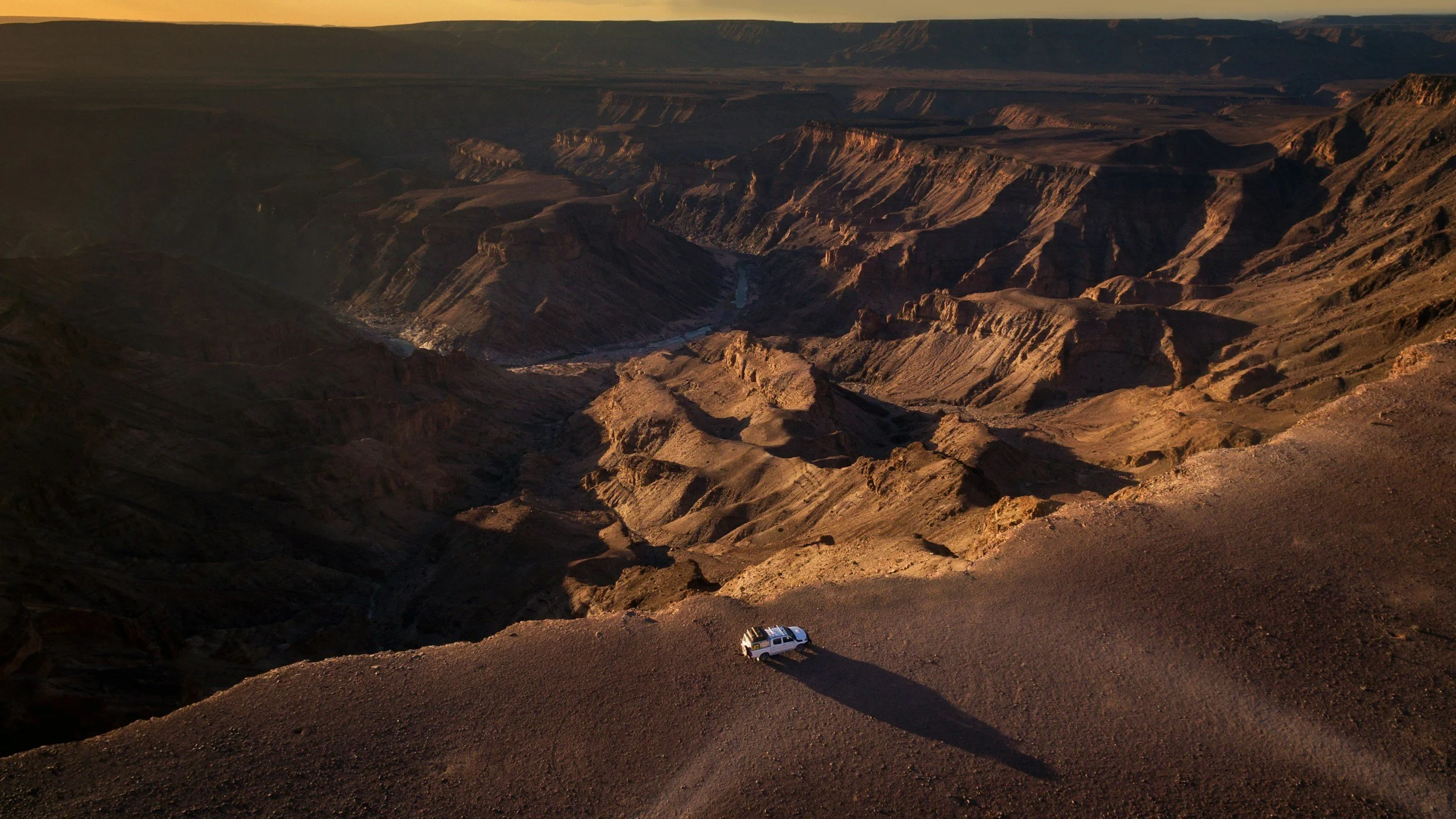
The canyon itself is massive. As the largest canyon in Africa, its scale only starts to sink in when standing on the edge of one of the viewpoints.
Campsite: Canyon Roadhouse Campsite
Aus
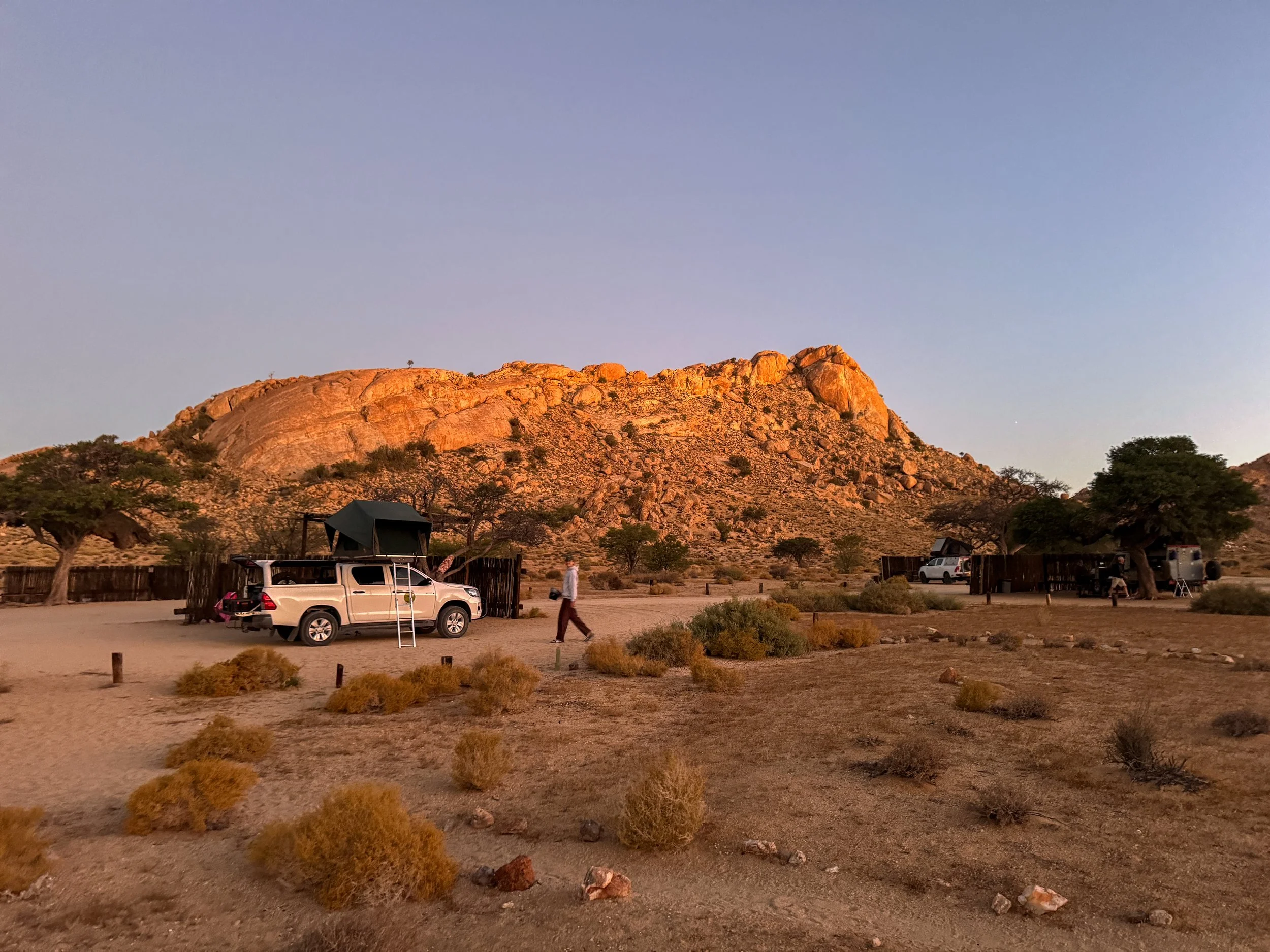
Aus is a quiet stop in the south of Namibia, surrounded by open plains and rocky hills. The landscapes here feel different again, shifting quickly as you explore the area. Short walks lead to viewpoints with wide, open views, often without anyone else around.
From Aus, it’s also possible to visit Kolmanskop, the abandoned diamond mining town near Lüderitz. The drive takes around 1.5 hours and leads through empty desert landscapes. Walking through the sand-filled buildings feels quite unreal.
The area around Aus is known for its wild horses, which can sometimes be seen moving through the plains. Also keep your eyes open for Ostriches and Chameleons. As the sun sets, temperatures drop noticeably, bringing cool evenings and clear skies.
Campsite: Klein Aus Vista Desert Horse Campsite
Mount D’Urban
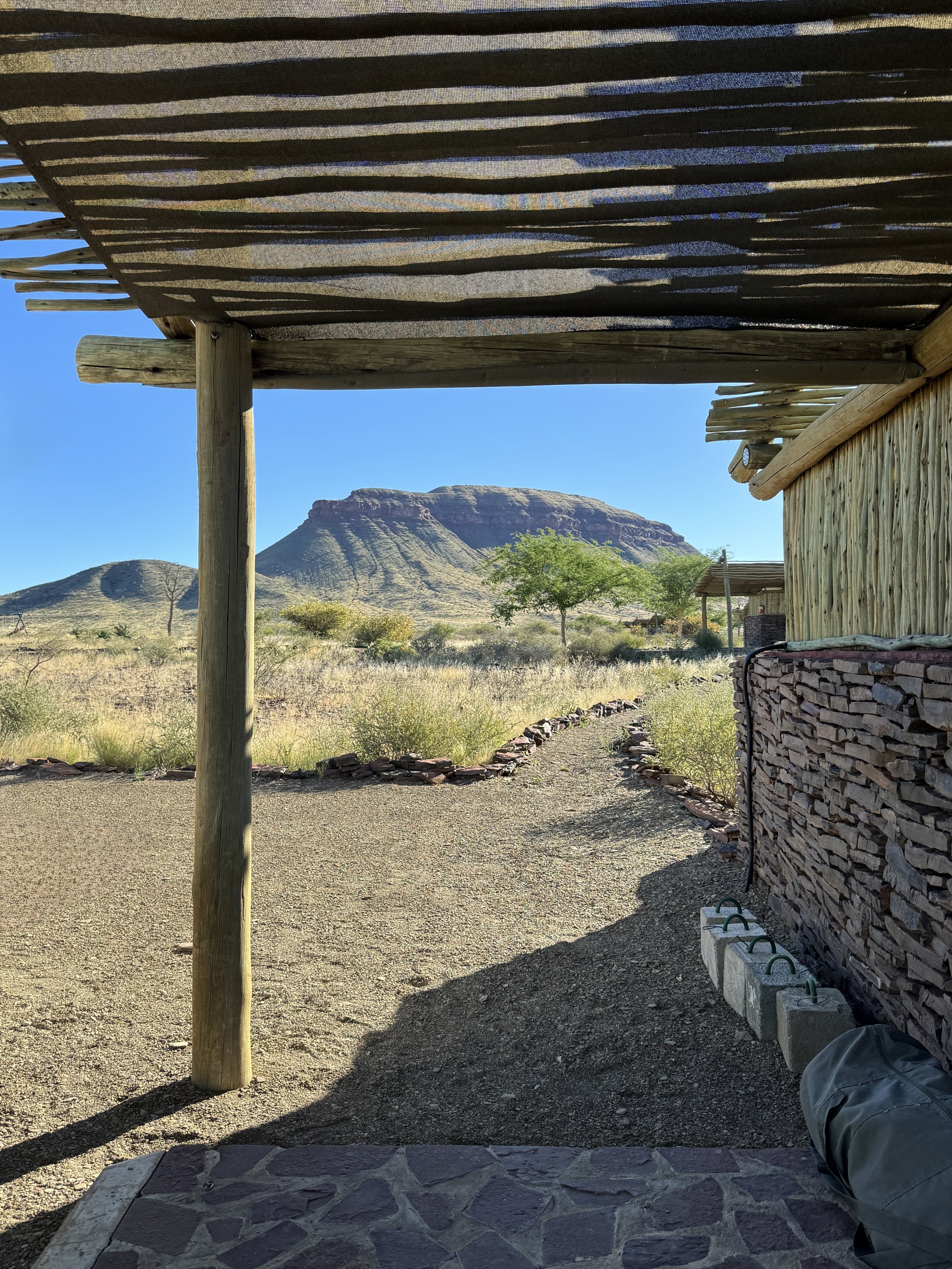
Mount D’Urban sits far from anything else. A lone mountain rising from the surrounding land. Besides the comfortable campsites there’s little around but open space and sky. This campsite feels isolated in the best way.
In the afternoon, take a short walk around the mountain, watching the light change over the endlessly stretching landscape. Evenings are spent outside, surrounded by darkness and countless stars.
The campsite is part of a working farm, and the owners sell some of their own products on site. Make sure to try their homemade bread!
Campsite: Mount D’Urban Campsite
Sesriem - Sossusvlei
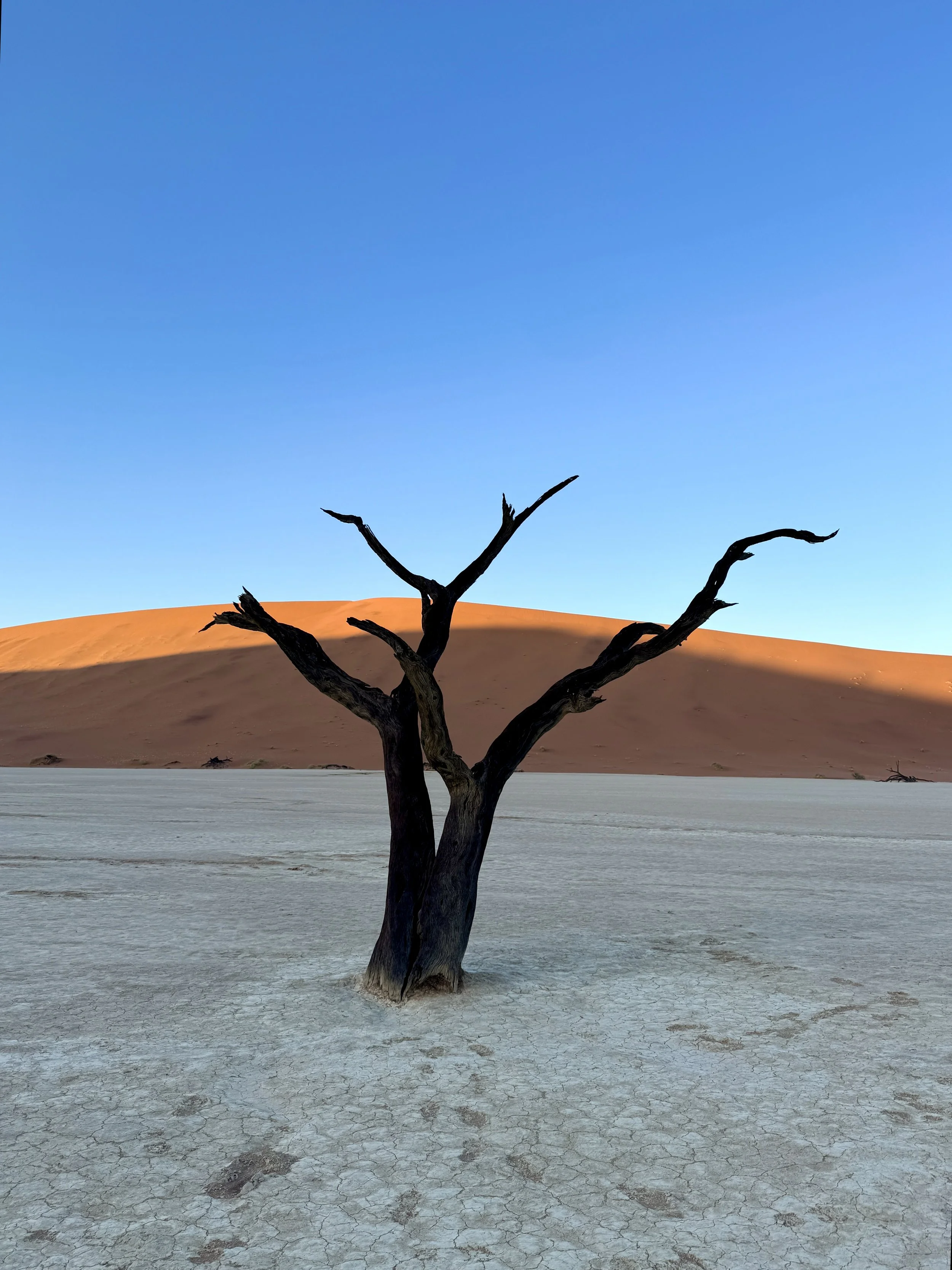
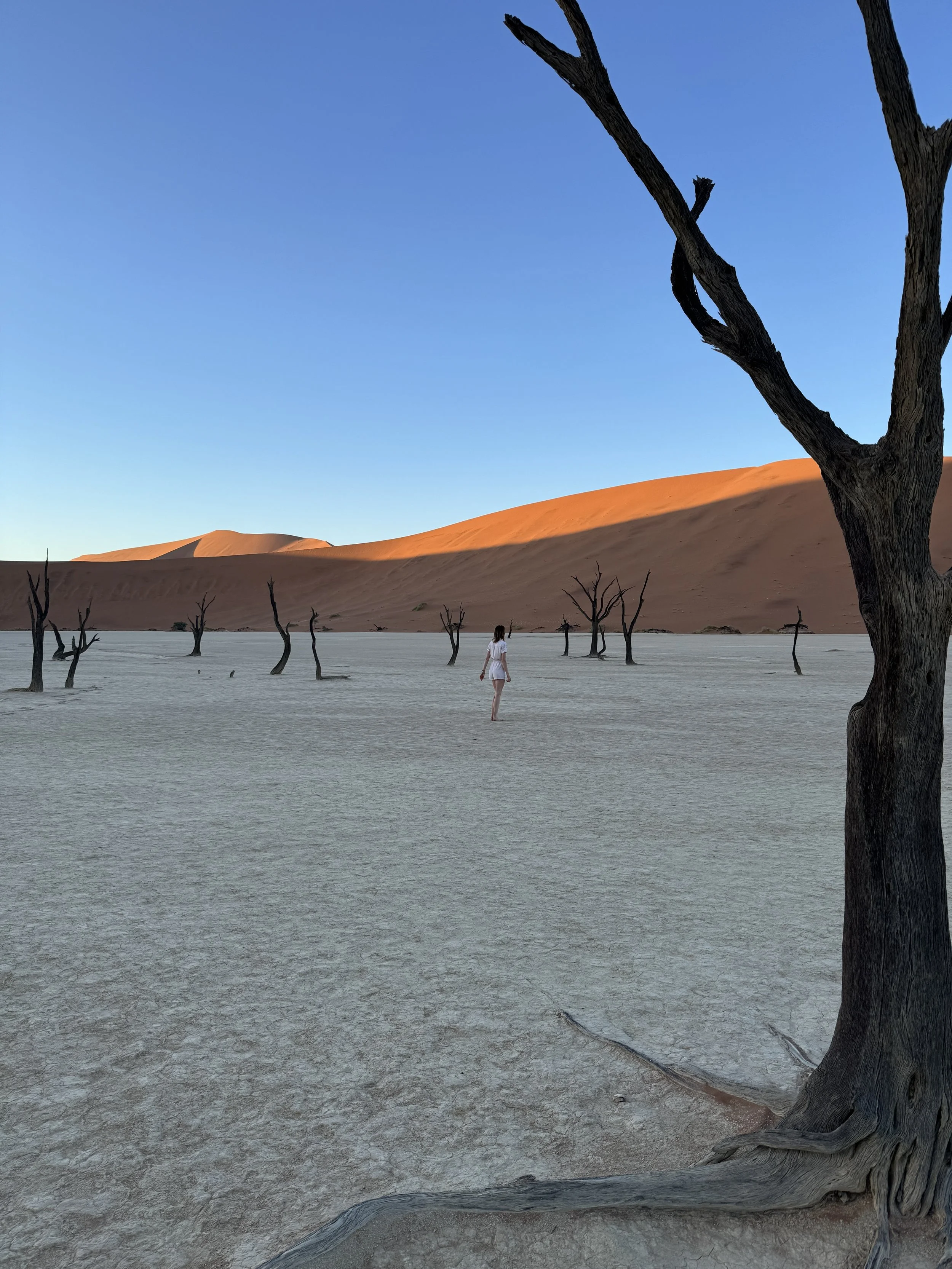
Sesriem is the small desert outpost and base for exploring Sossusvlei. Once covered by water, this ancient valley has long since dried out, leaving behind pale clay pans and the iconic dead camelthorn trees, some over 900 years old, preserved by the extreme dryness. Towering dunes rise all around, constantly shaped by wind and time.
Sunrise and sunset are when the landscape feels most alive. Climbing a dune as the light slowly changes reveals endless layers of sand and shadow. Early mornings are best spent in Deadvlei, where the contrast between white clay, dark trees, blue skies and orange dunes creates one of Namibia’s most iconic scenes. As the day heats up, the desert sets the pace again, inviting slower moments and breaks from the sun.
Staying at Sesriem Campsite, located inside the first park gate, allows for early access to the area. It’s an ideal base for reaching Deadvlei or the dunes at sunrise, before the heat builds and the crowds arrive. Make sure to buy a permit for the area when you arrive at the campsite.
Campsite: Sesriem Campsite - NWR
Don’t miss
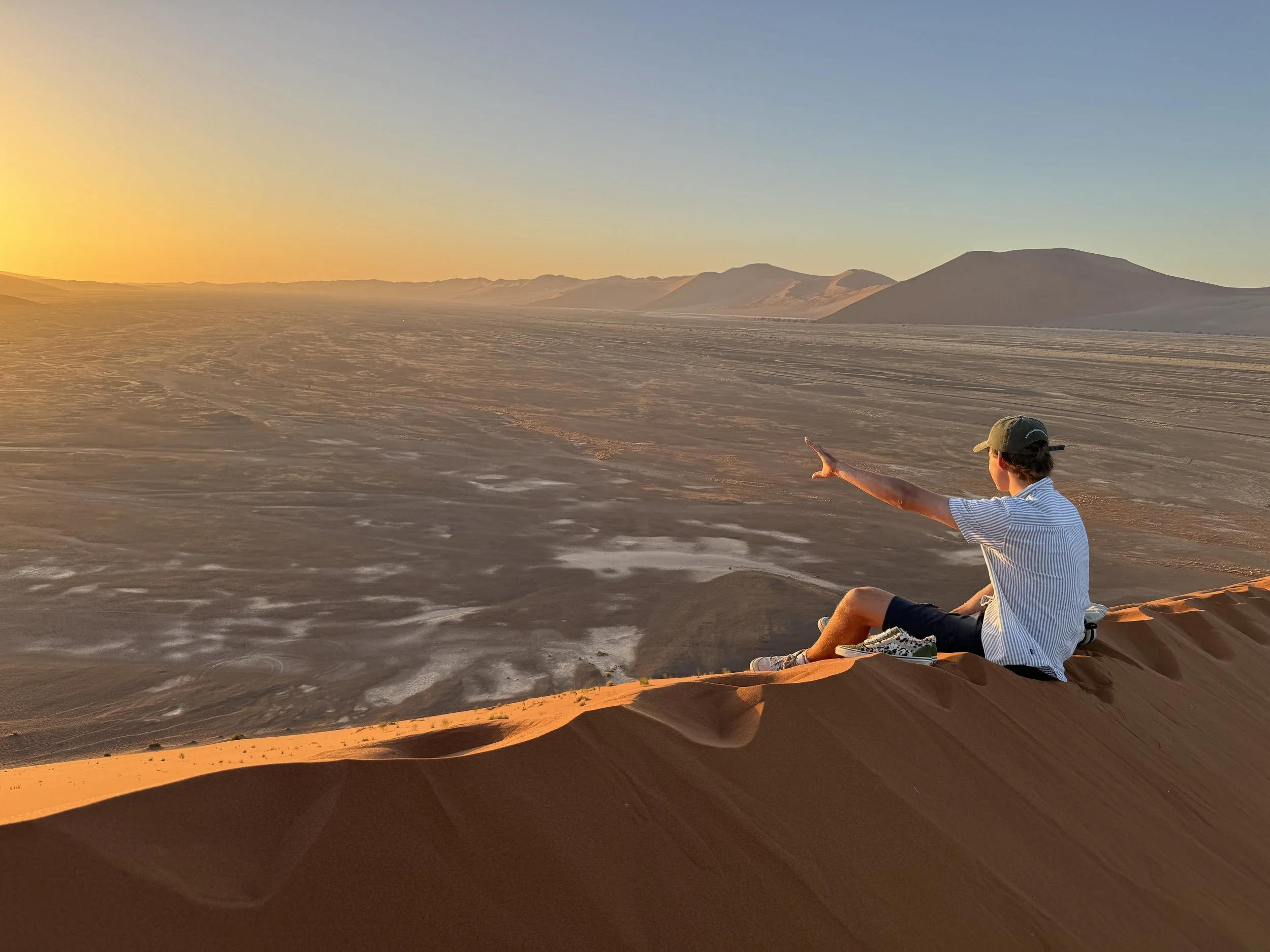
Climbing one of the dunes for sunset
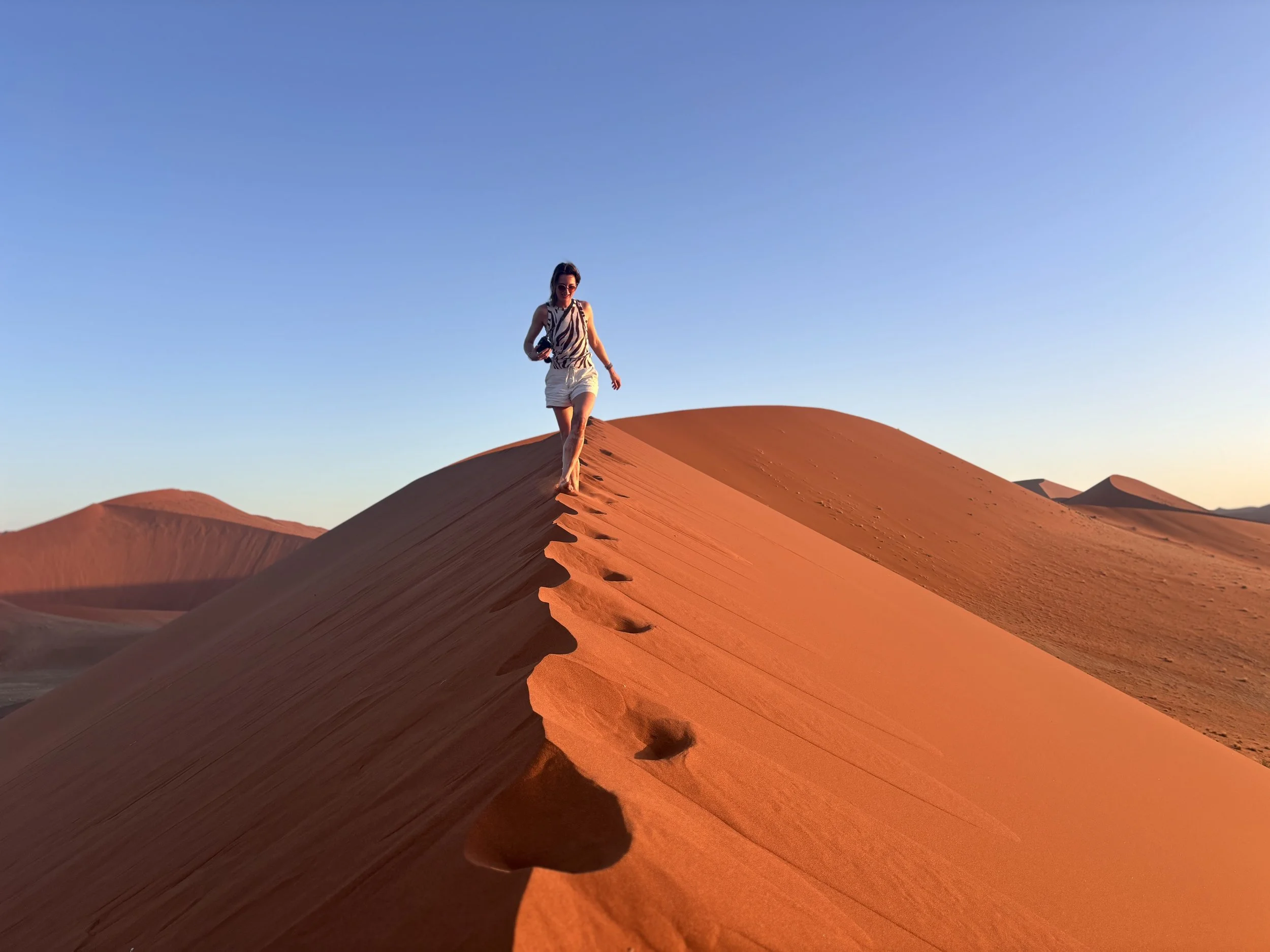
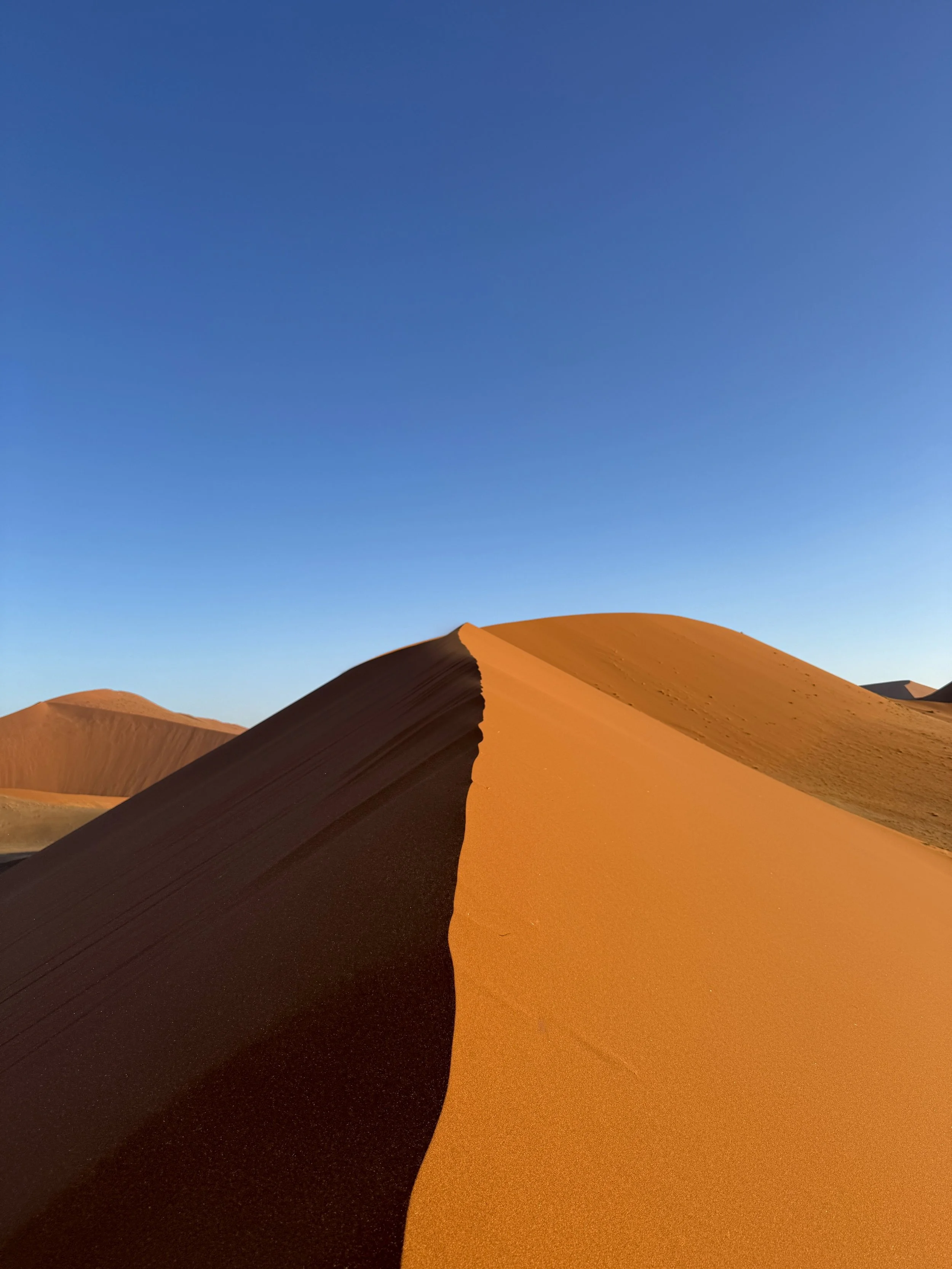
Several dunes around Sossusvlei can be climbed, each revealing a different view over the desert. Dune 45, rising about 170 metres, is a good option for sunset. As the sun drops, the sand takes on a deep red glow. Climbing barefoot works best, especially around sunrise or sunset when the sand has cooled (Bring closed shoes just in case, if the sand is still too hot, walking barefoot could be very uncomfortable) . Be prepared to get sandy and enjoy the climb.
Sunrise at Deadvlei
Early mornings at Deadvlei are magical. The sun slowly rises above the immense dunes, lighting up the iconic black camelthorn trees on the white clay pan, an incredible sight! Going early doesn’t just give the valley that special glow, it also means avoiding most of the crowds. The drive from Sesriem takes just under an hour, with the last stretch over soft sand. With a good 4x4 it’s an easy drive (lower your tire pressure slightly and keep a steady speed), though shuttles are also an option.
The biggest dune in Sossusvlei
‘Big Daddy’ is the tallest dune around Sossusvlei, rising about 325 metres between Deadvlei and the surrounding salt pans. You can walk all the way to the top for wide views over the clay pan and dunes, though the climb takes effort and can take around 1.5 hours, depending on your pace. Going early makes a big difference. It’s also perfectly fine to stop partway up and simply take in the desert view from there.
Sesriem canyon
Located just outside the park gate, a short walk leads into this narrow canyon shaped by water over time. It’s a quiet spot that offers shade and a different feel from the surrounding desert.
Naukluft
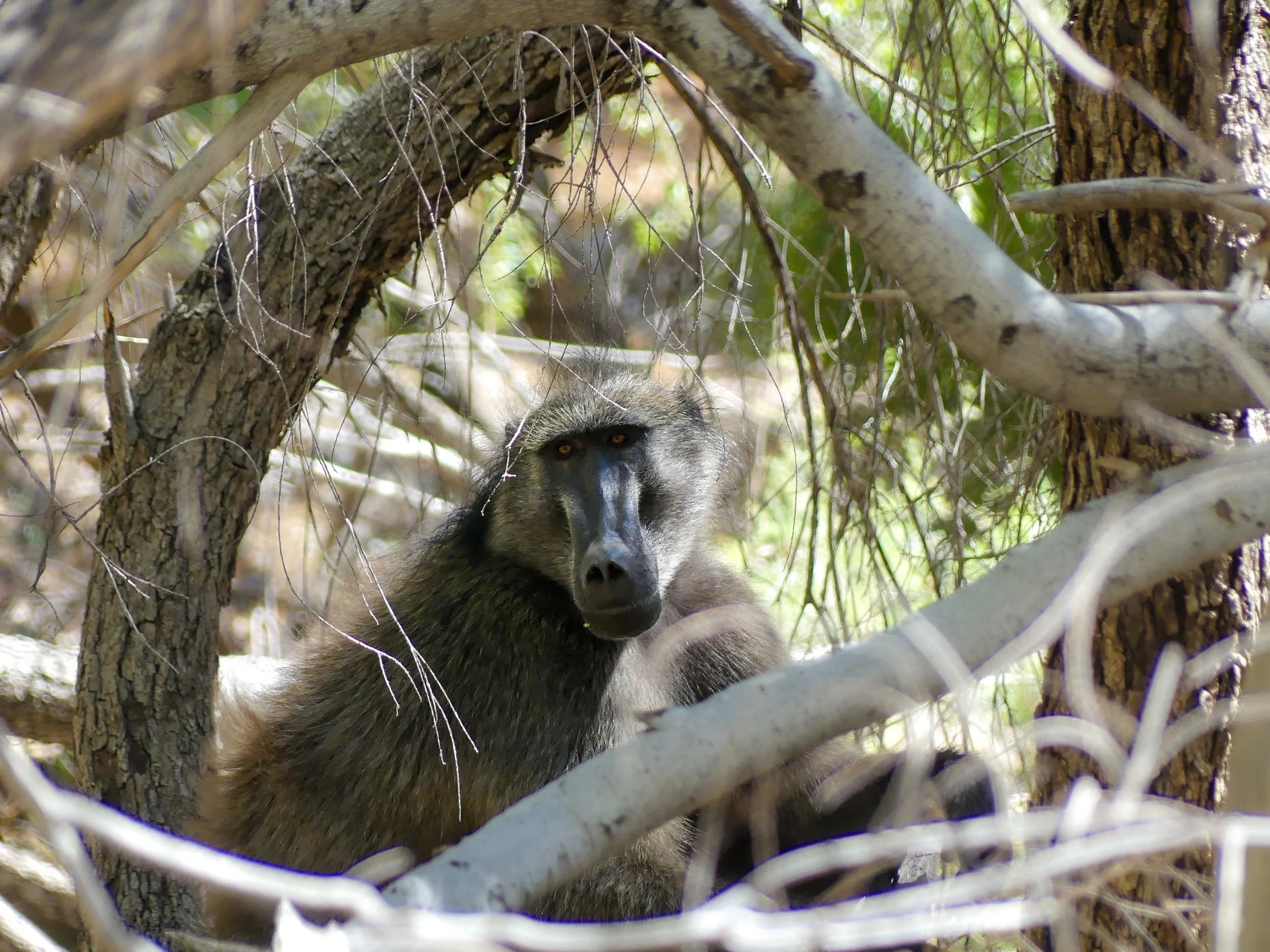
Naukluft forms part of the vast Namib-Naukluft National Park and feels very different from the surrounding desert. This is a more mountainous area, known for its hiking trails, rocky landscapes and wildlife such as mountain zebra and baboons.
The area offers several hikes, ranging from short walks to longer routes. Even the shorter trails are a great way to get a feel for the landscape and explore the area at your own pace. Going early is key, temperatures rise quickly, especially during the warmer months.
One of the most popular trails is the Olive Trail (10 km), a scenic hike that leads over rocks and through a narrow canyon. The Waterkloof Trail (17 km) is a longer route that takes you past natural pools hidden between the mountains.
Routes are clearly marked, but using an app like AllTrails can be helpful to keep track of your hike.
Campsite: Naukluft Campsite – NWR
Don’t miss - A pit stop in Solitaire
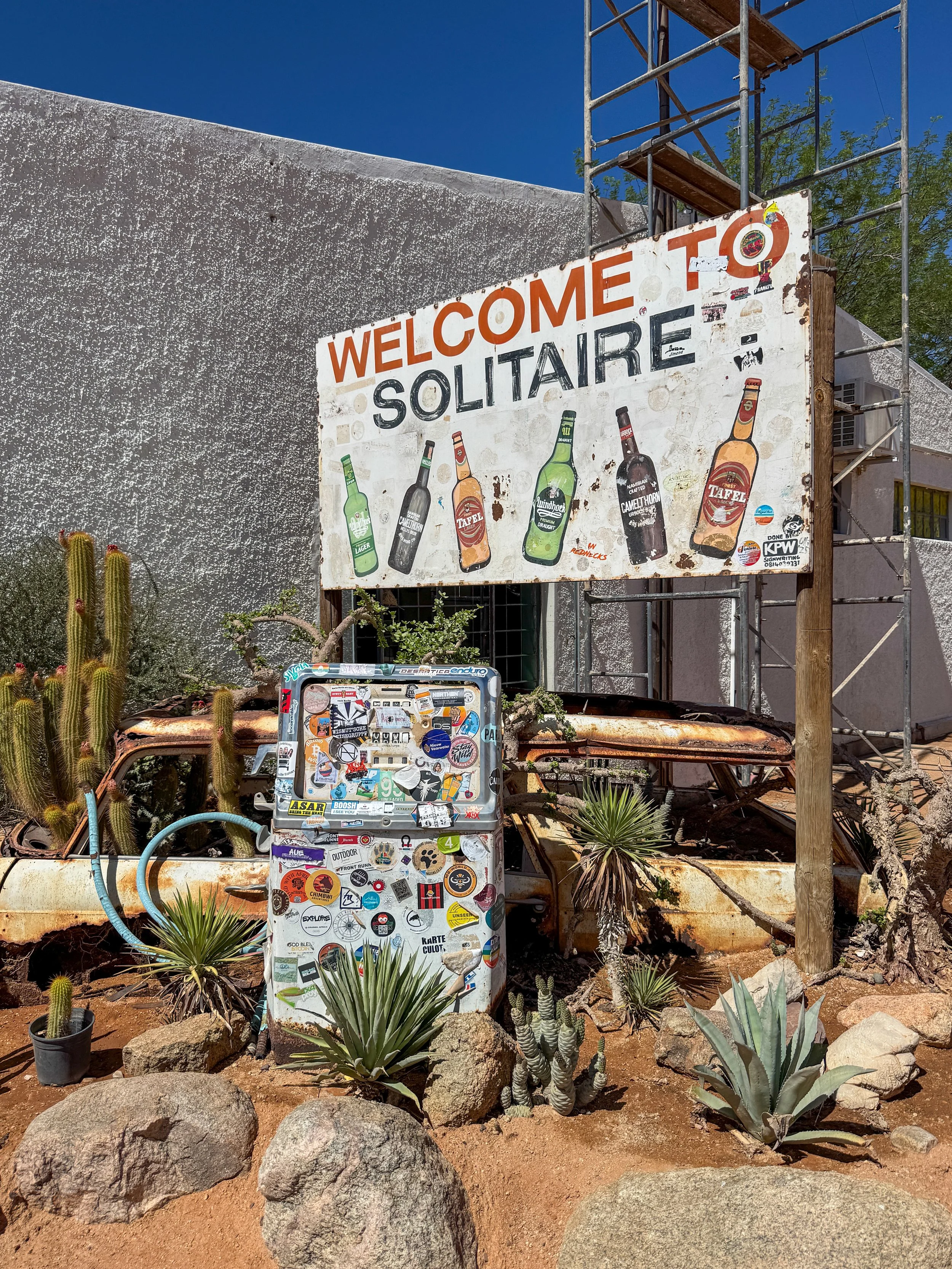
On your way from Naukluft to Swakopmund, you’ll pass through the small desert settlement of Solitaire. A perfect pit stop to refuel your car and stretch your legs.
Solitaire is best known for Moose’s famous apple pie, baked fresh and loved by just about everyone passing through. But there’s more to this tiny place than fuel and pie. Dutch writer Ton van der Lee wrote a book about life in Solitaire, capturing the quiet, isolated life of this desert outpost. Reading it before your visit adds an extra layer to the stop. Suddenly this lonely place in the middle of nowhere feels full of stories.
Reading tip: Solitaire - Ton van der Lee
Swakopmund
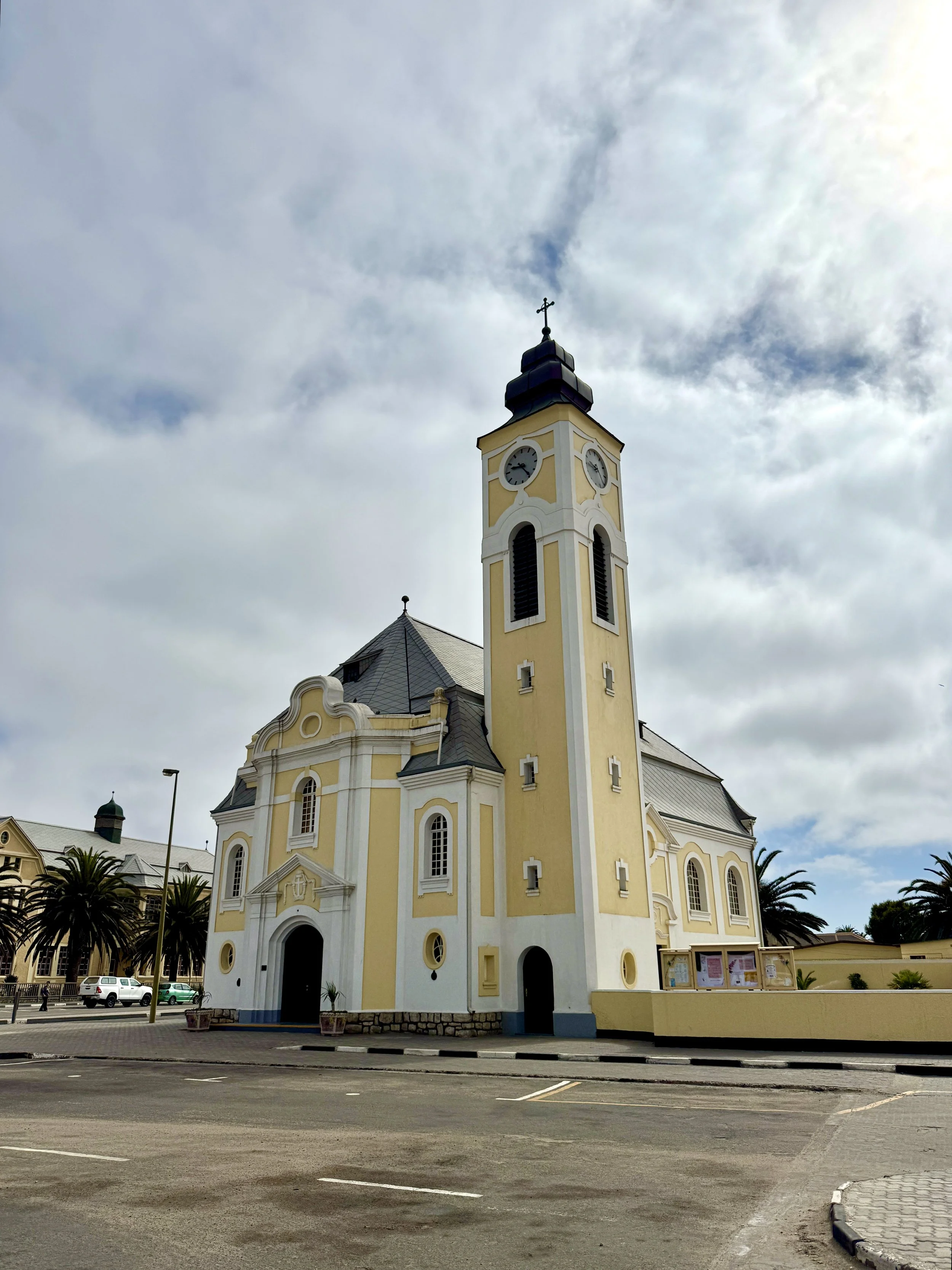
After days in the desert, Swakopmund feels like a short break. A coastal town where the Atlantic breeze cools everything down. German influences are still visible in the architecture, giving the town a slightly unusual feel, especially set against the surrounding desert.
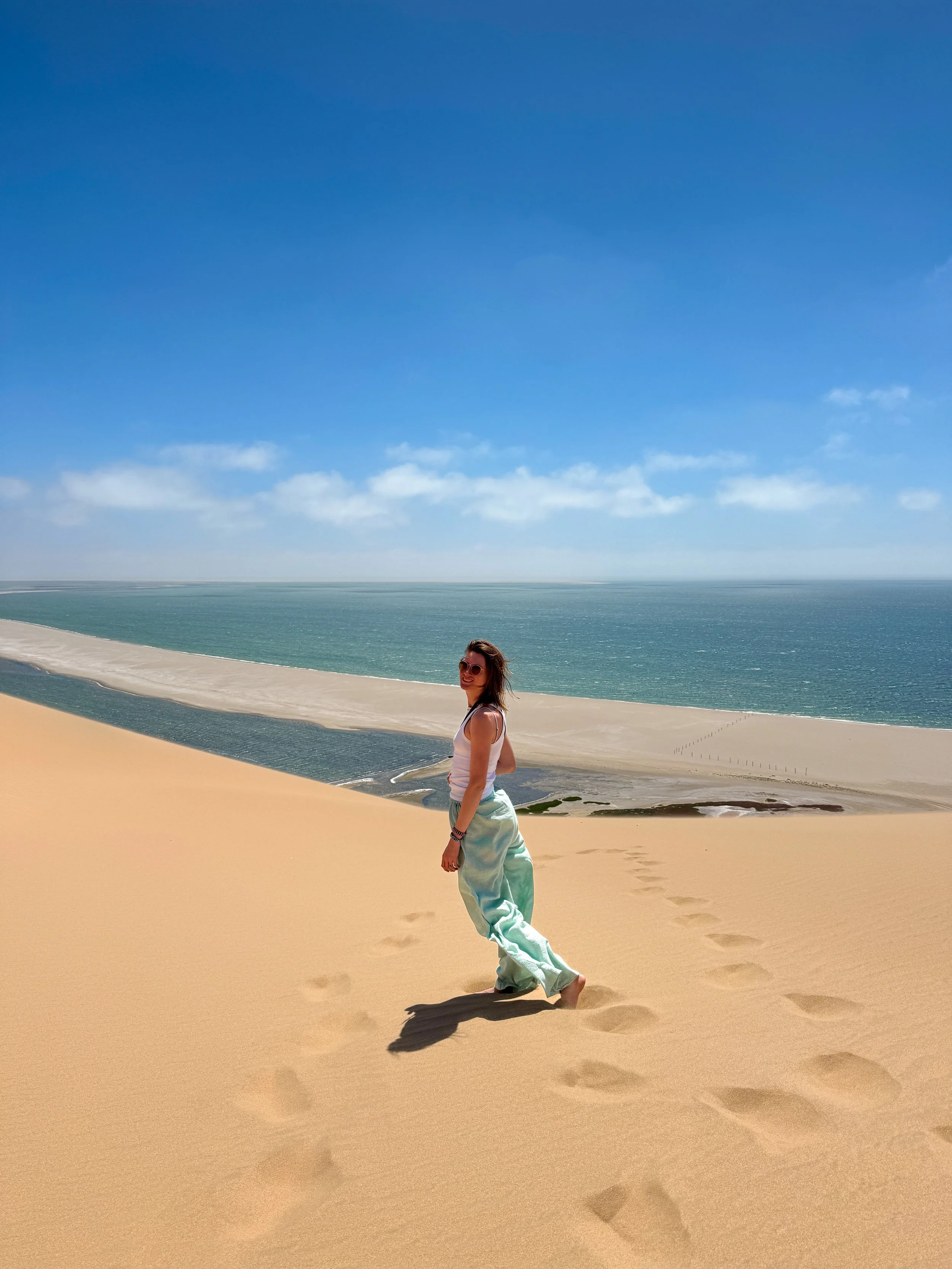
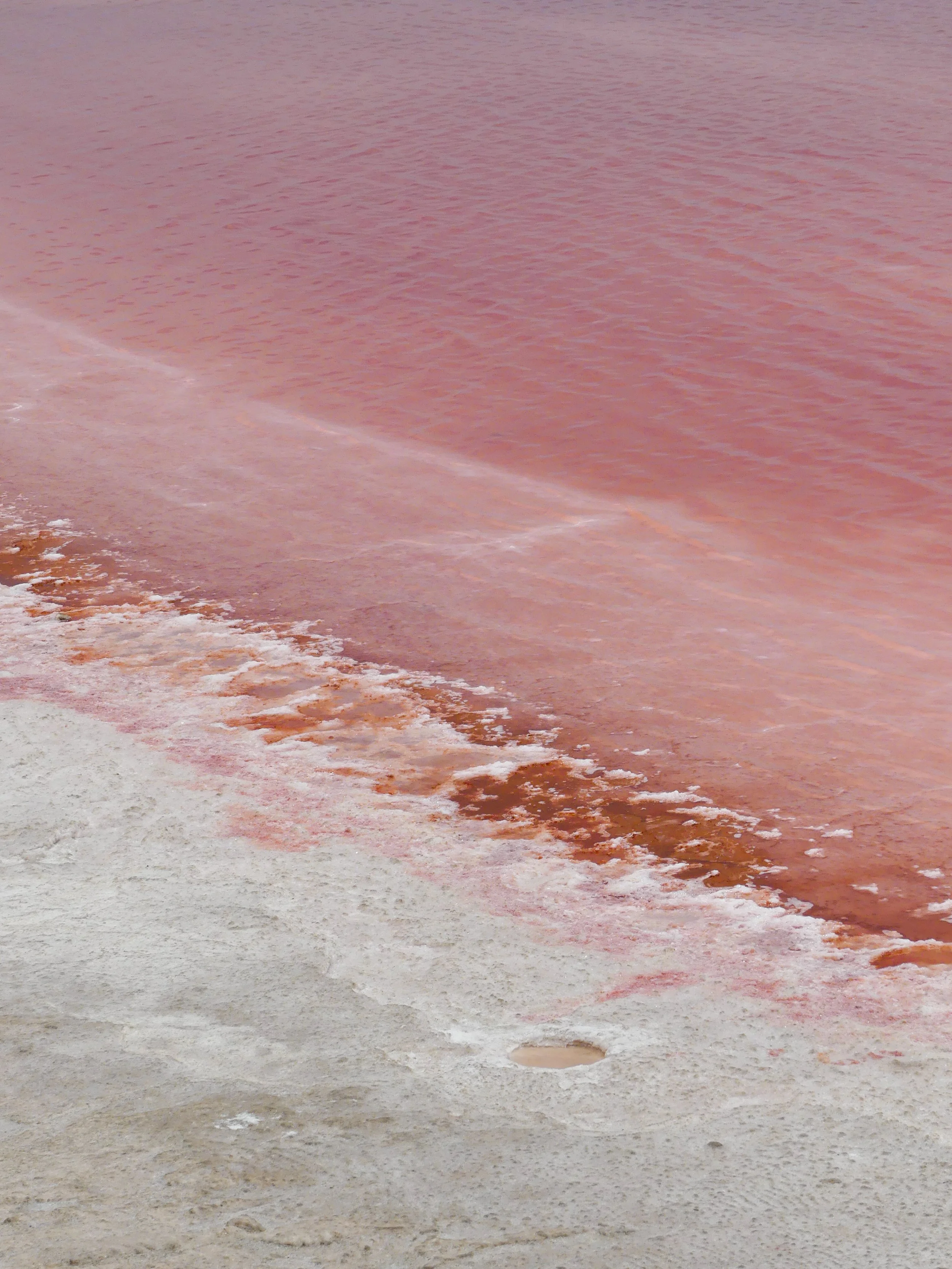
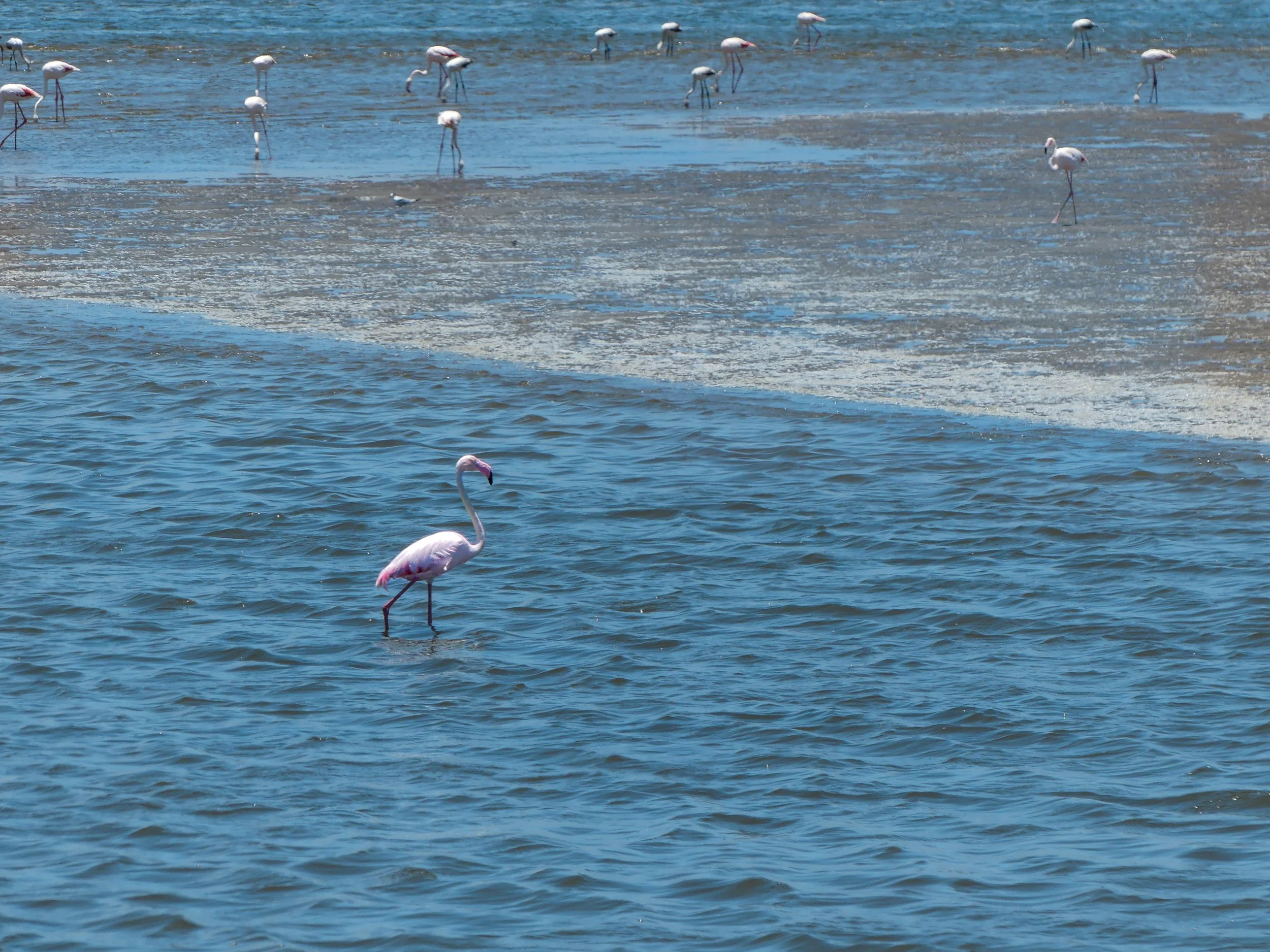
Swakopmund works well as a base for exploring the coast and doing some fun activities. From here, guided trips head south to Sandwich Harbour, where the impressive dunes of the Namib meet the ocean, passing flamingo lagoons and pink salt pans along the way. North of town, Cape Cross offers a very different coastal landscape, home to one of the largest seal colonies in the world.
A tour over the sand dunes of Sandwich Harbour is a must, but there’s plenty more to do near Swakopmund. Quad riding, sandboarding or kayaking, all offer different ways to experience the landscape. There’s something for every type of traveller here, whether you prefer to take it slow or get a bit more adventurous.
Campsite: Tiger Reef Campsite
Don’t miss
A tour through the dunes of Sandwich Harbour
A 4×4 tour to Sandwich Harbour takes you deep into a landscape where the dunes of the Namib meet the waves of the Atlantic Ocean. Most tours pass flamingo lagoons and pink salt pans before heading into the dunes. From there, the drive turns into a thrilling ride as the 4×4 moves up and down the steep sand dunes, almost like a natural rollercoaster. Watching endless sand meet the ocean is an unforgettable sight, and without a doubt one of those moments that stays with you long after you’ve left.
Treating yourself on eating out
After days of braais and simple meals on the road, Swakopmund is the perfect place to treat yourself. The town has a surprisingly good food scene, with plenty of restaurants to choose from. Some places we loved were: Tiger reef, right on the beach (and at the campsite if you’re staying there) with some good seafood and snacks. Soundgarden and Altstadt are fun for dinner and drinks, they serve German styled food and have a cosy beer garden vibe. Wild Rocket cafe has really nice breakfast.
A visit to Cape Cross
Cape Cross is home to one of the largest Cape fur seal colonies in the world, with tens of thousands of seals gathering along the shore. It’s an impressive but very raw experience, loud, busy and with a strong smell that comes with so many animals in one place.
If you visit between November and December, during breeding season, you may also see dead or abandoned pups, which can be confronting but is part of the natural cycle here.
Spitzkoppe
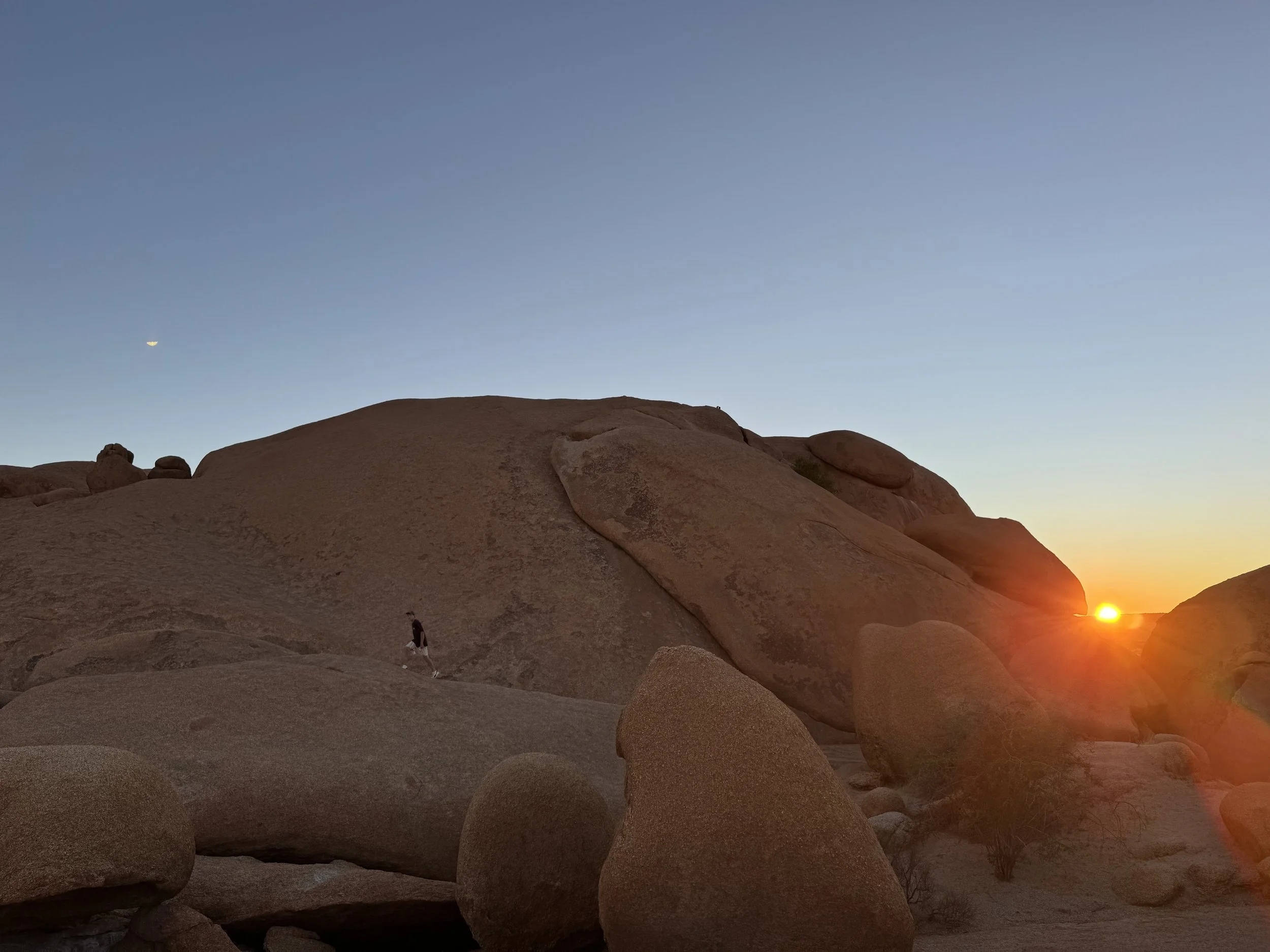
Spitzkoppe quickly became one of my favourite places in Namibia. Giant granite rocks rise from the flat desert. It’s quiet and remote, just you and this impressive landscape, nothing else.
Camping at Spitzkoppe is a big part of the experience. The campsites are scattered between the rocks and you can choose your own spot, which makes it feel extra special and secluded. From camp, you can explore the area on foot, scrambling over rocks and following short trails into the hills. One of the highlights is visiting the ancient Bushman rock paintings, hidden beneath rocky overhangs. Some of these drawings are over 4,000 years old and show animals and human figures, giving a unique insight into the area’s history.
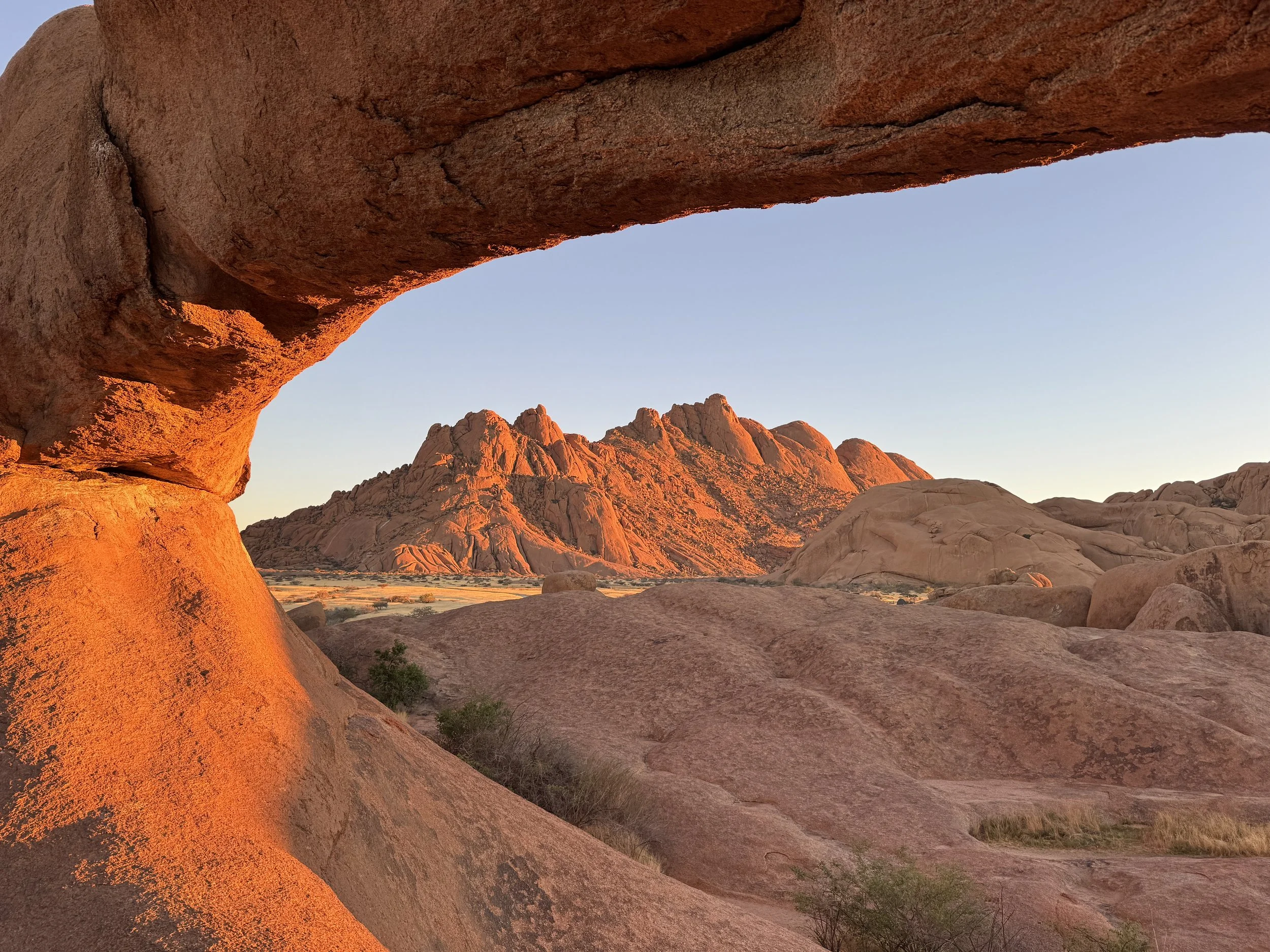
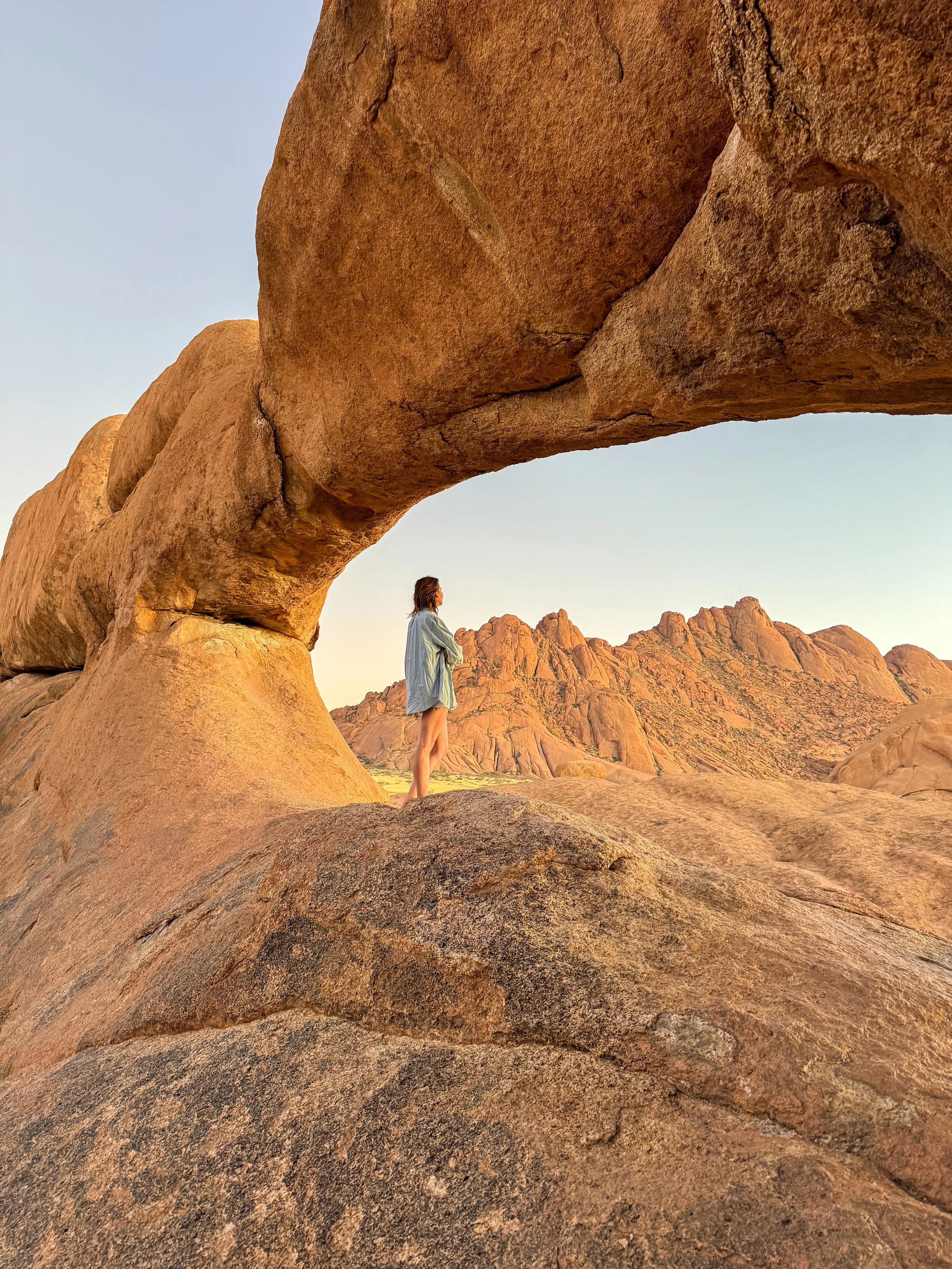
Waking up early is definitely worth it here. A short hike leads to the famous Rock Arch, a natural stone arch with wide views over the surrounding landscape. Watching the sun rise through the rocks, with nothing but desert around you, is one of those moments that stays with you long after you leave.
Campsite: Spitzkoppe Camping
Don’t miss
The Bushman drawings
Hidden under rocky overhangs, the ancient Bushman paintings offer a glimpse into the past. Some are believed to be over 4,000 years old. A guide can tell you more about their meaning and the history of Namibia’s Bushman, who roamed around Spitzkoppe long before we did. You can view the paintings at Bushman’s Paradise (A steep climb is required to get to the paintings) or at Small Bushmans Paradise (more easily accessible).
Sunset or sunrise at The Rock Arch
The Rock Arch is a must at Spitzkoppe. Early morning or late afternoon, the light transforms the granite, creating a magical glow over the already impressive landscape. We came for sunrise and were lucky to only share this unique sight with a couple others.
Damaraland
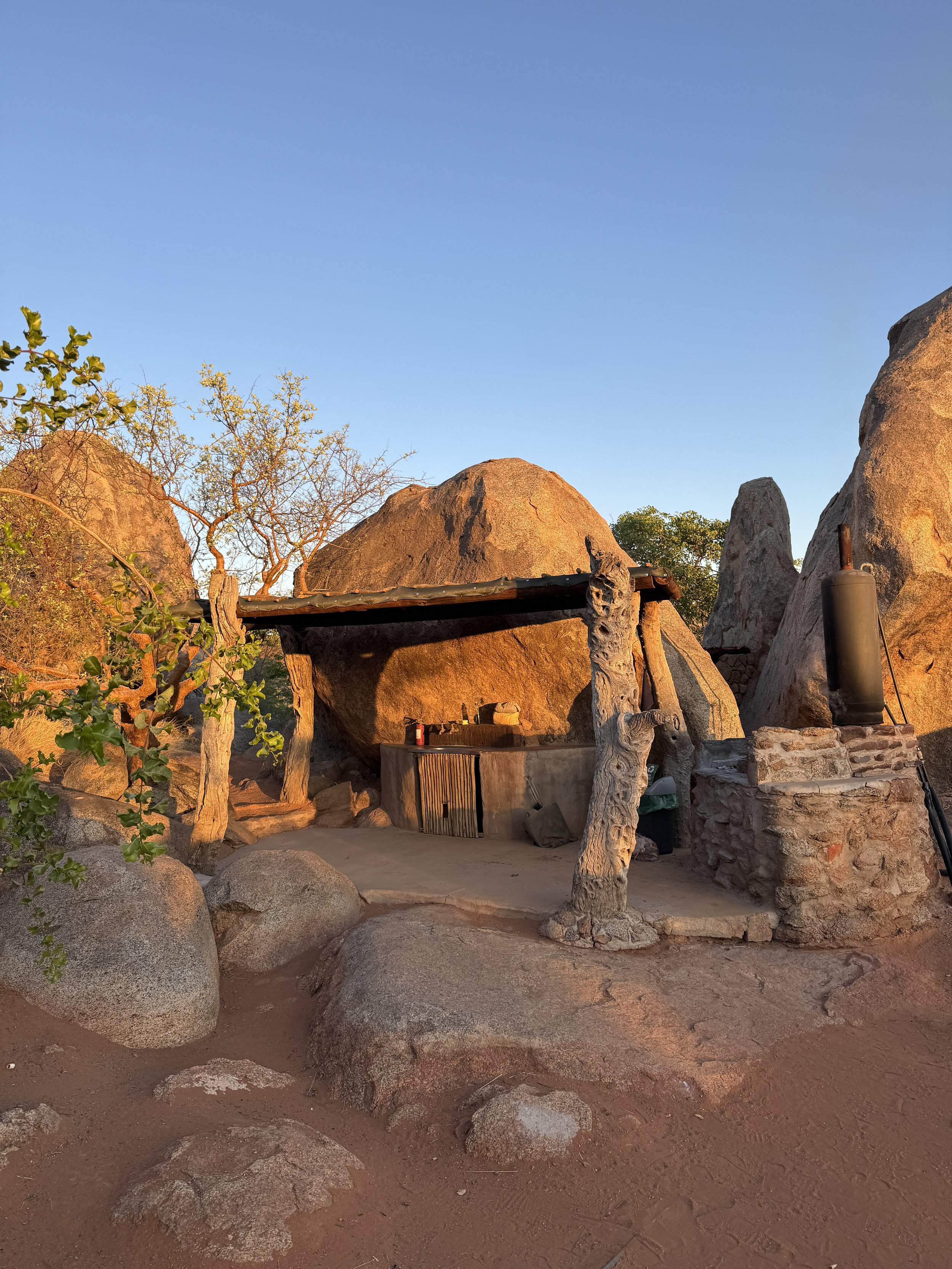
In the northwest of the country you’ll find Damaraland, a vast region that was once inhabited by the Damara tribe. The area is known for its dramatic desert landscapes, ancient rock art and unique desert-adapted wildlife. Distances are long, roads are rough, and wildlife often appears when you least expect it.
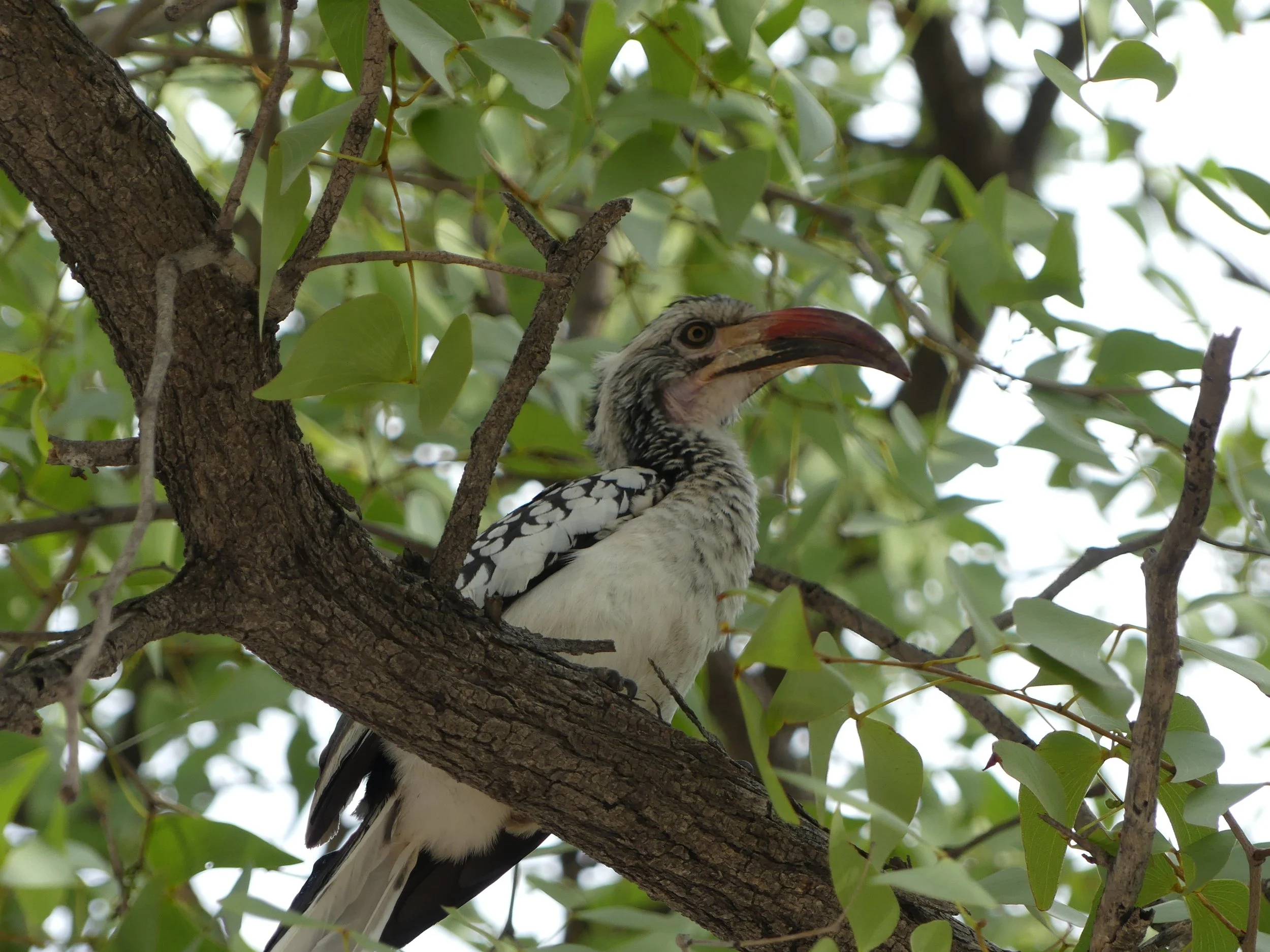
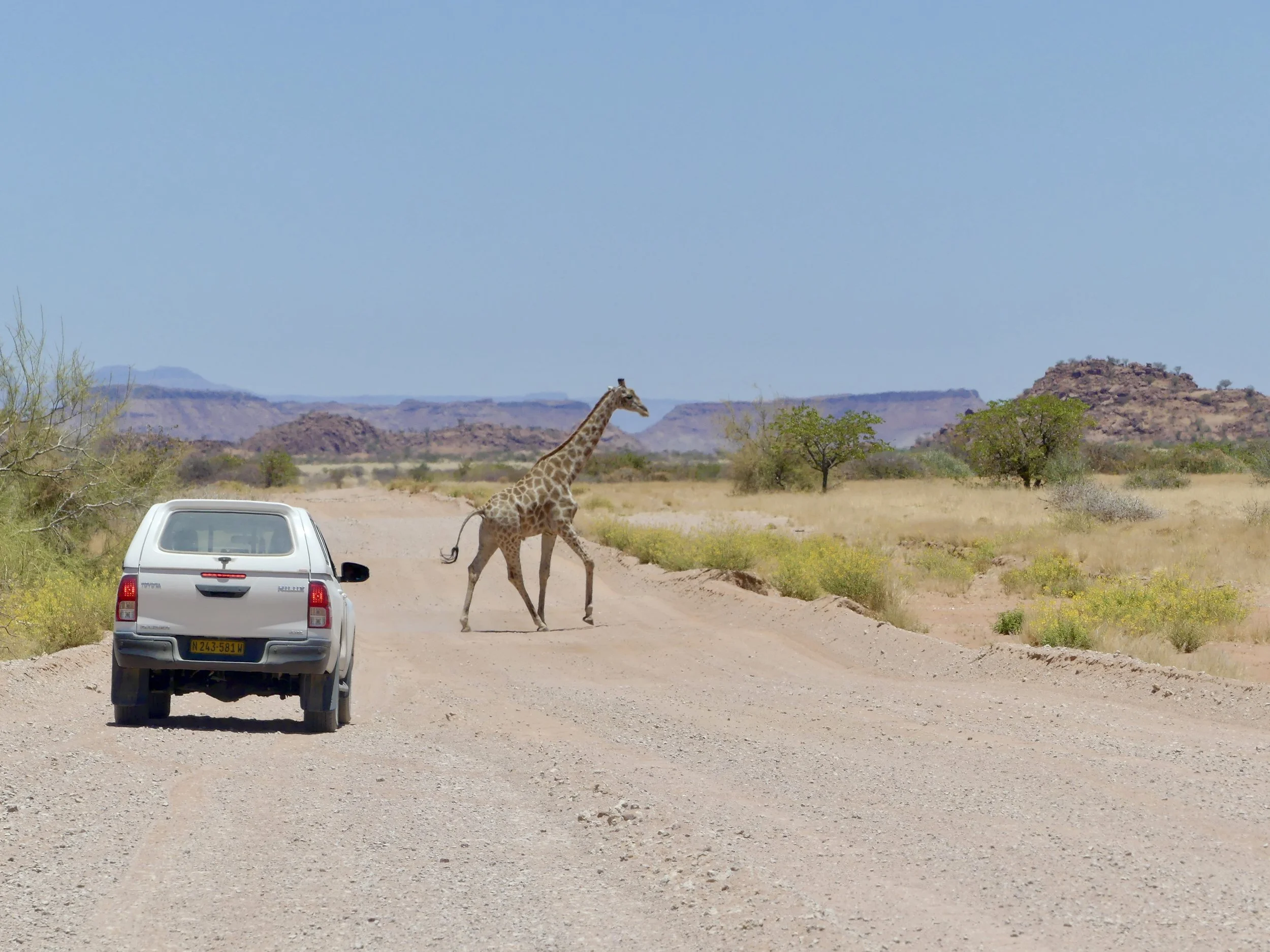
The landscape feels exactly how many imagine Africa to be: tall yellow grasses, scattered green trees and dramatic rock formations rising from the plains. With giraffes casually crossing the road and hornbills hopping around your campsite, Damaraland quickly becomes a favourite for many travellers.
Staying in different parts of Damaraland allows you to experience its diversity. Early morning walks are best before the heat sets in, when wildlife is most active. Dassies, baboons, jackals and birdlife are common sights, often with no one else around.
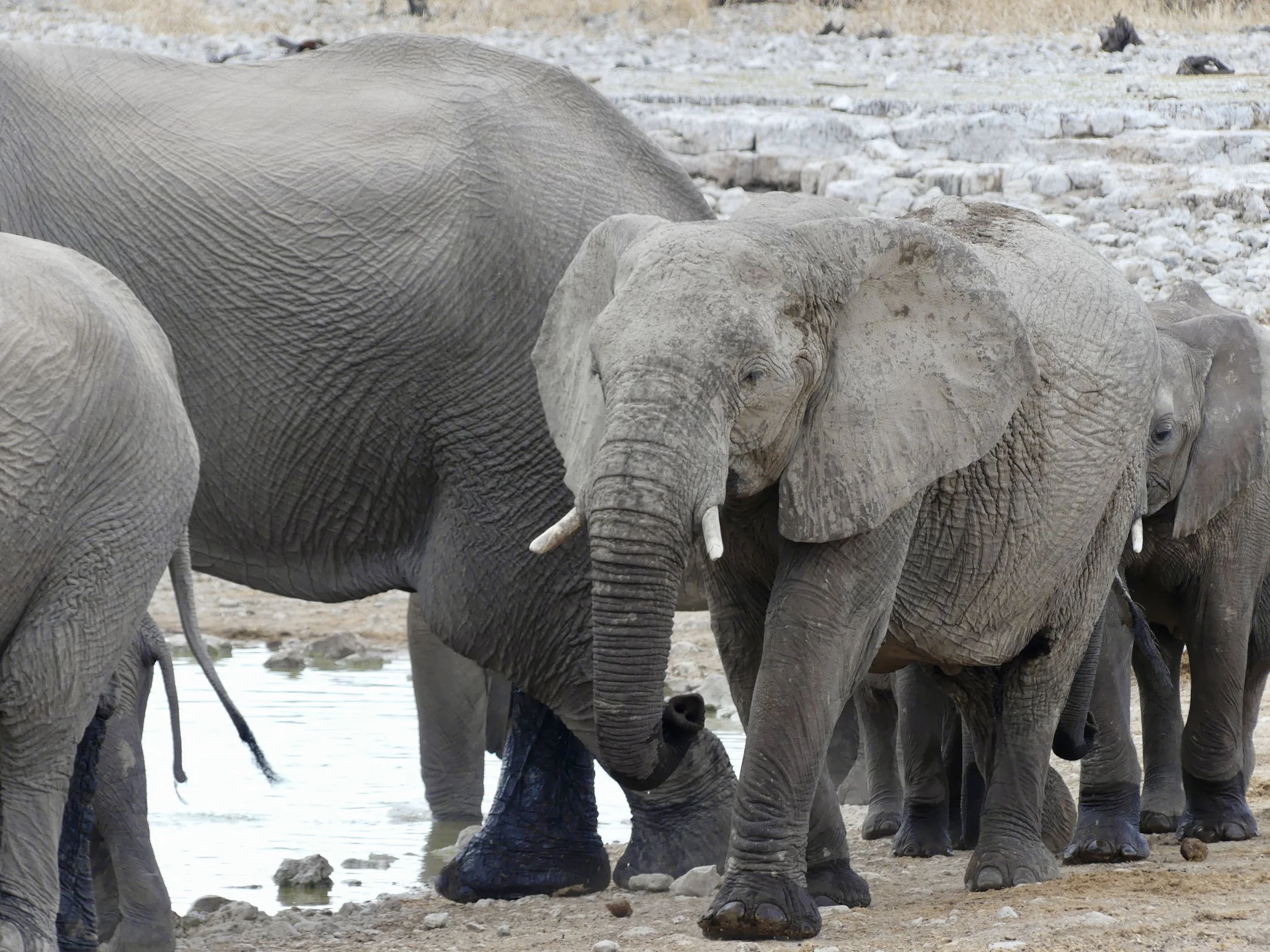
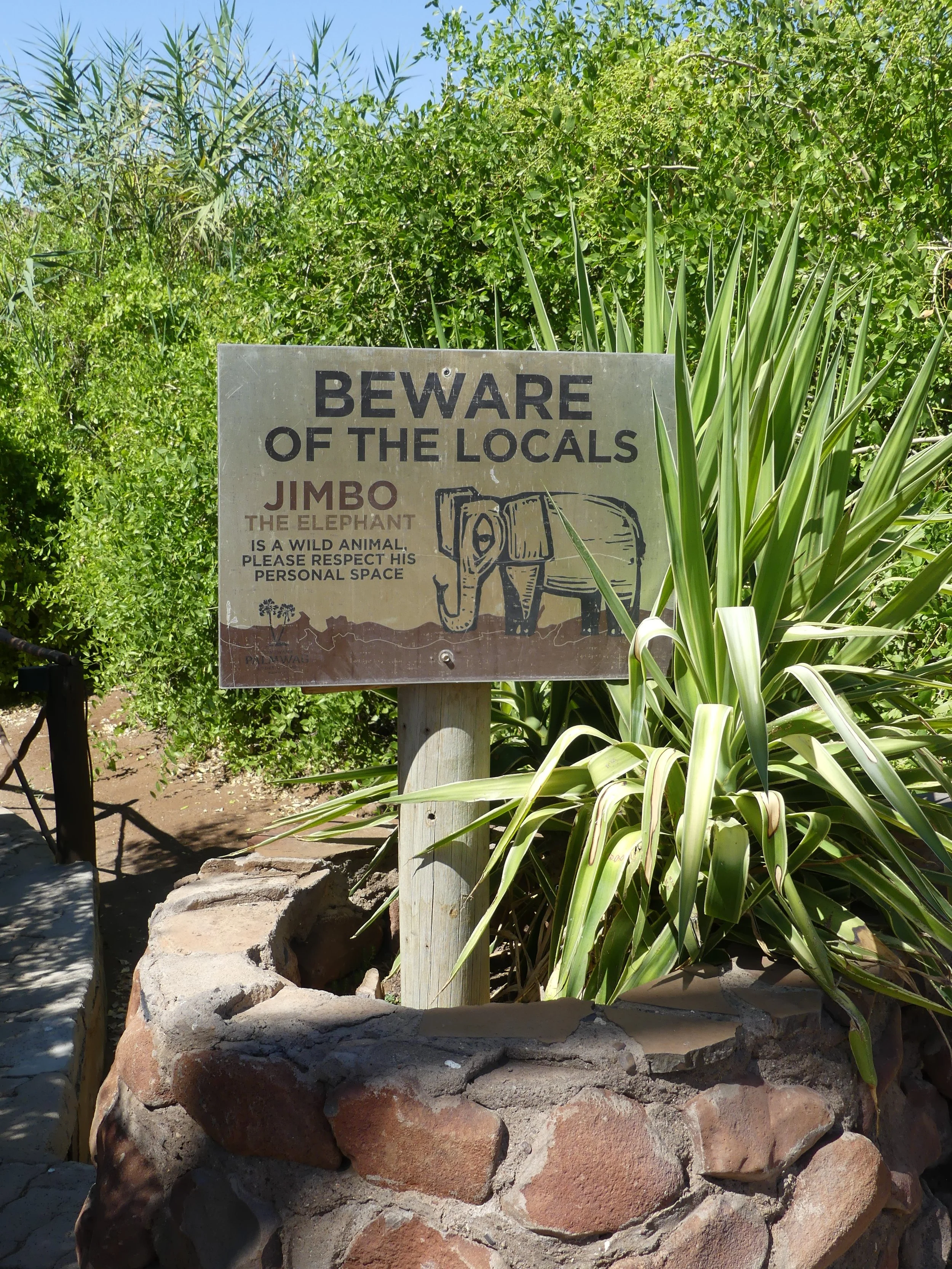
Northern Damaraland, around Palmwag, is known for its desert-adapted elephants. These elephants have evolved to survive in extremely dry conditions and are often found moving through dry riverbeds in search of food and water. Spotting them isn’t guaranteed, but that sense of unpredictability is part of what makes this region so special.
The same area is also home to desert-adapted black rhinos. Damaraland supports one of the largest free-roaming black rhino populations outside national parks, protected through long-term conservation efforts. Seeing one is rare, but knowing they roam these landscapes adds an extra layer to exploring the region.
One of the most scenic routes through Damaraland is the Grootberg Pass, winding through the mountains and offering wide views over the surrounding plains. It’s a beautiful way to experience the scale of the region before continuing further north.
Campsites: Mowani Campsite, Palmwag Campsite, Hoada Campsite
Don’t miss
A dessert elephant or black rhino tracking
Join a guided drive to look for desert-adapted elephants and black rhinos moving through the dry landscape. Sightings are never guaranteed, but that’s part of the experience. You can book a guided drive at the campsites but you could also explore the Palmwag area on your own. Self-driving through the rough, off-road terrain is an adventure in itself. Even without wildlife sightings, the thrill of looking for these incredible animals is worth it! And sometimes the wildlife finds you instead, with elephants occasionally passing right by the campsites.
Explore the landscape by foot
Many campsites in Damaraland offer walking trails that lead straight into the surrounding landscape. Early mornings are best, when it’s still cool and wildlife is more active.
The White Lady painting
Brandberg is Namibia’s highest mountain, and tucked into its rocky valleys are some of the country’s most famous rock paintings, including the so-called White Lady painting. The paintings are thought to be thousands of years old and show humans, animals and ceremonial scenes. Even if you’ve already visited rock art sites like Spitzkoppe, the scale of Brandberg and the detail of the White Lady make it a unique sighting.
Driving the Grootberg Pass
Chances are you’ll already be driving through Grootberg Pass on your way through Damaraland. This winding road through the Grootberg Mountains is stunning and definitely worth a photo stop.
Etosha
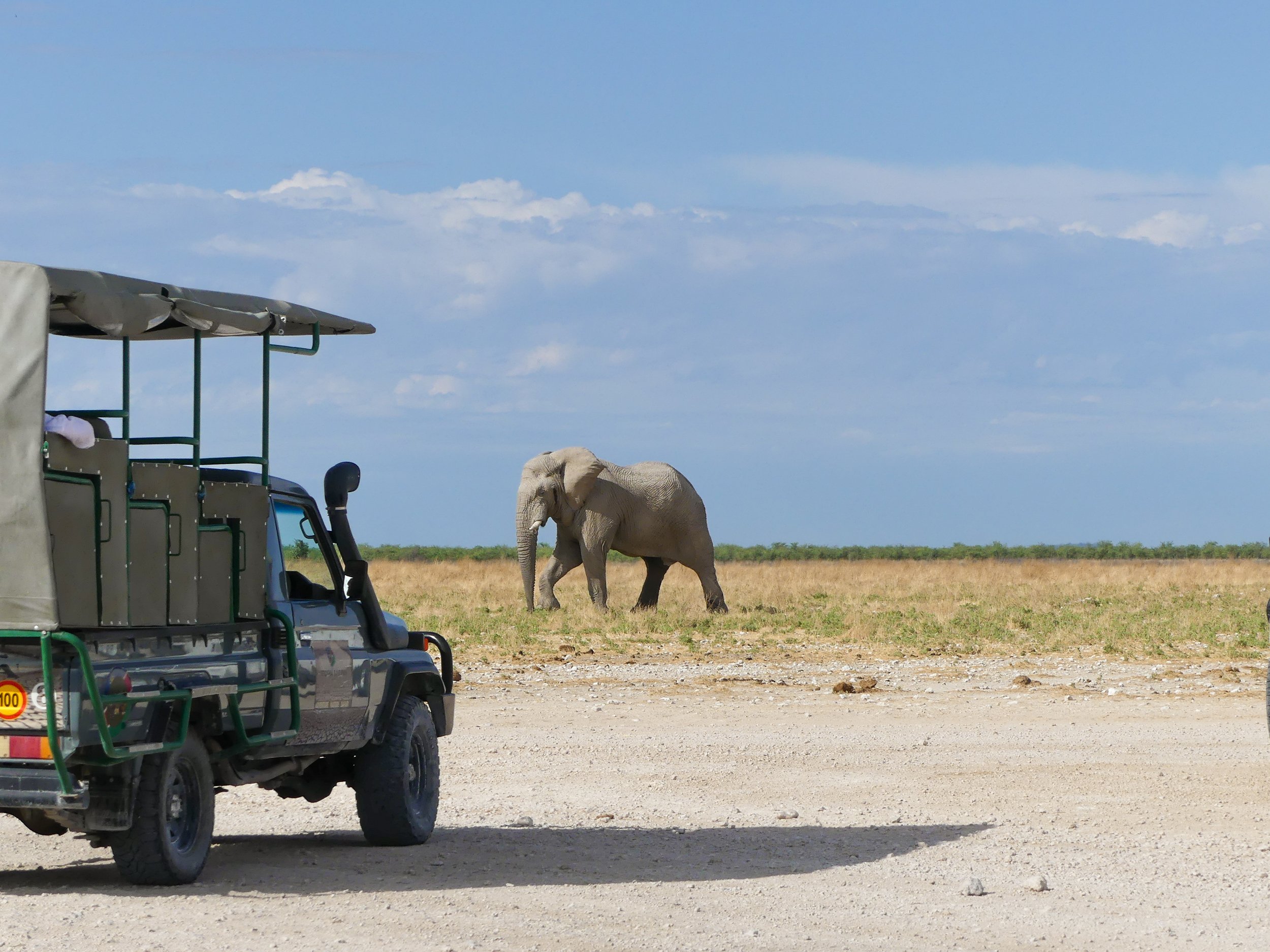
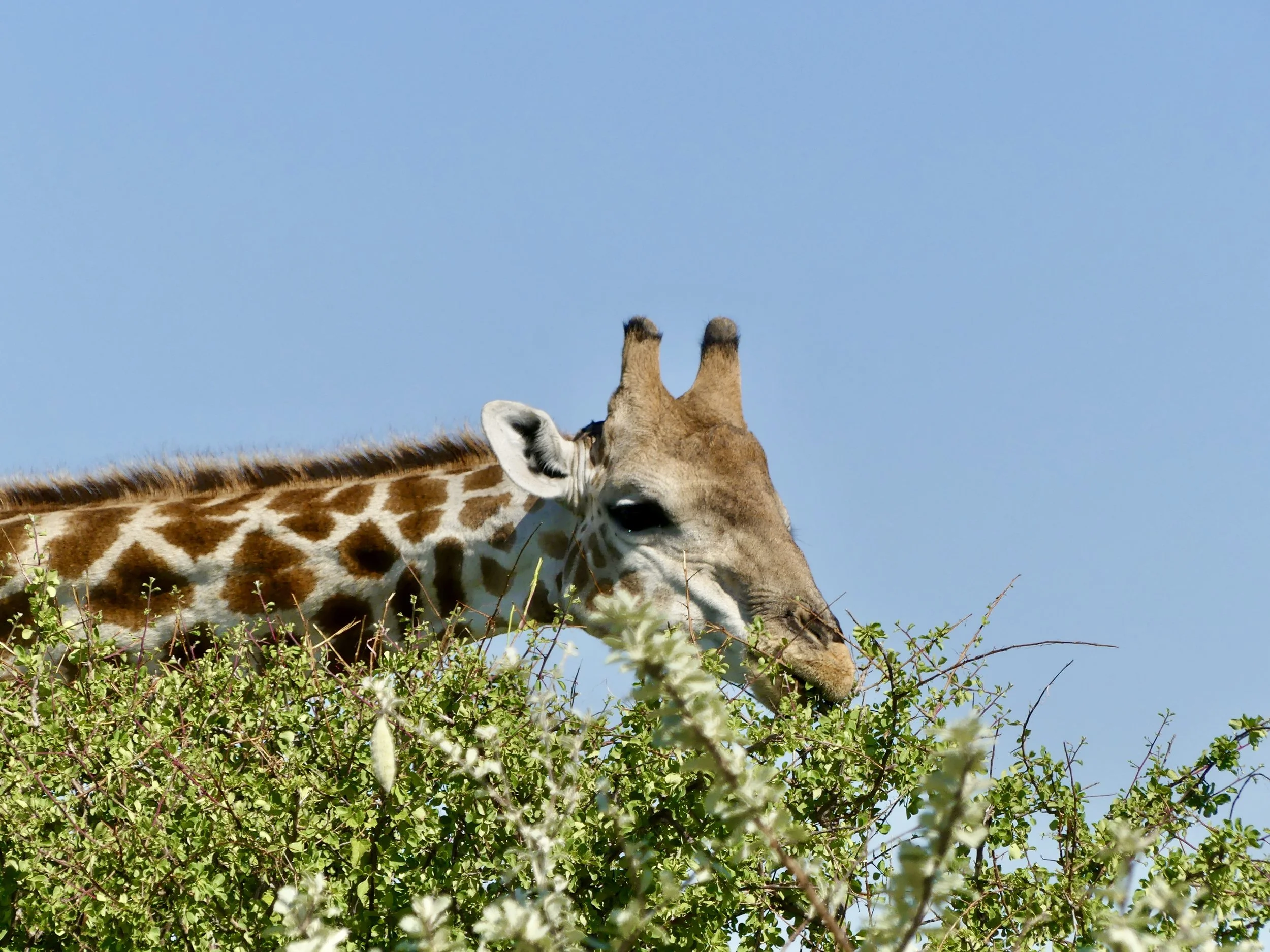
Etosha is often the highlight of a Namibia trip, and it’s easy to see why. The park stretches over 22,000 km² of flat salt pans, savannah and scrubland, giving a sense of space that feels almost endless. Wildlife here is abundant and varied, from elephants and giraffes to lions, springboks and rare black rhinos. Spotting them while driving through the park on your own is part of what makes Etosha so special.
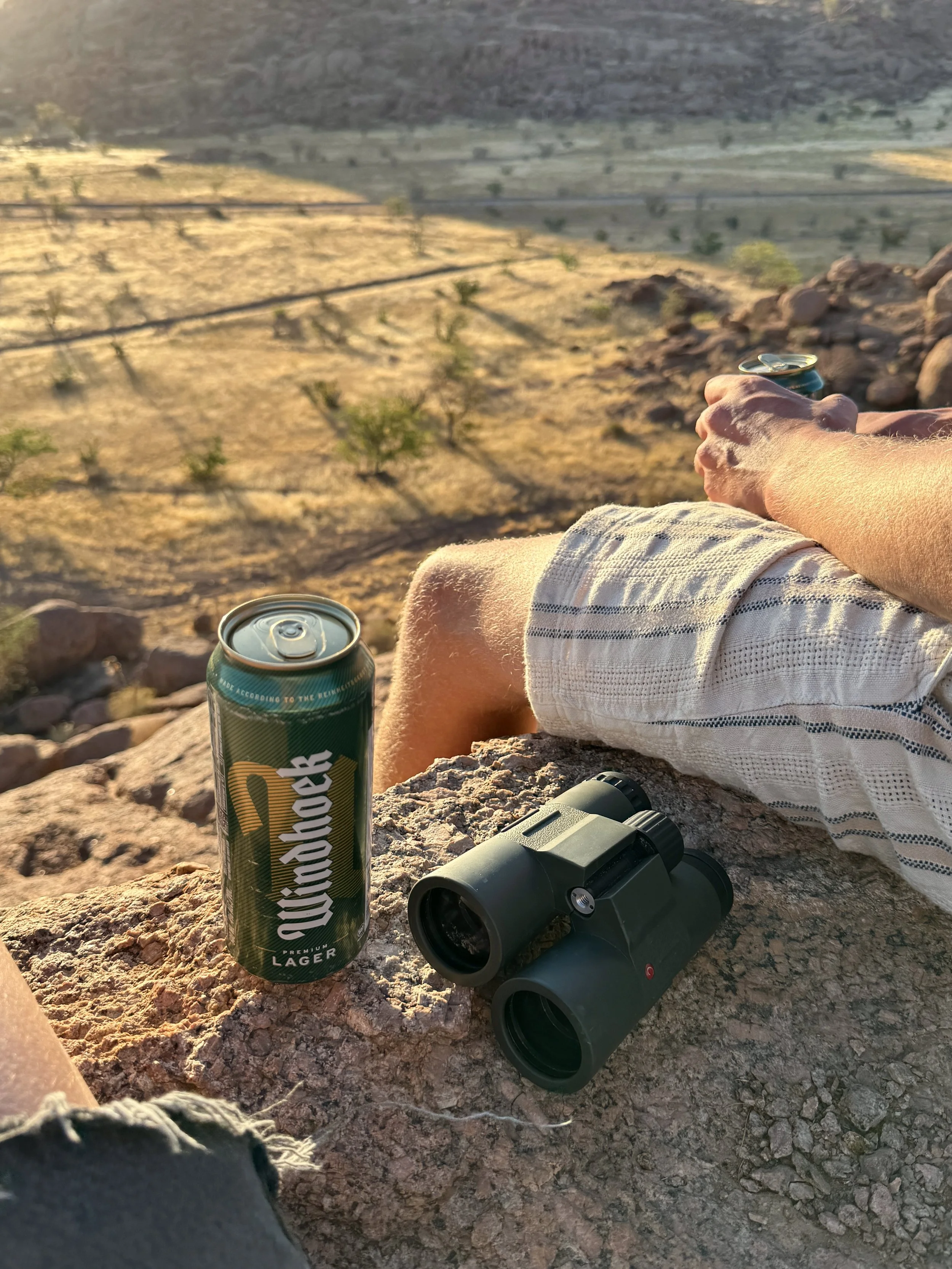
The park is very spread out, and even at popular waterholes, it rarely feels crowded. Bring good binoculars, and make sure to stop regularly. Waterholes are the best places to watch animals gather, drink and interact. With early mornings and late afternoons usually being the best times to be exploring, when animals are most active.
It’s worth buying a park map when you arrive, not just for navigation but because many of them show which animals live here, which makes spotting unknown wildlife more fun.
I recommend staying for a couple days to fully discover the area. Etosha has several campsites scattered throughout the park, and it’s worth staying inside if you can. Being based in the park gives you more freedom to explore at your own pace, and many of the camps have waterholes right on site. Sitting by these waterholes, especially in the evening or at night, is a highlight in itself. The Okaukuejo waterhole is the largest and most famous. It’s a great spot to watch elephants gathering, and if you’re lucky, you might even spot rare visitors like black rhinos.
Campsites: Okaukuejo, Halali, Namutoni - NWR
Waterberg
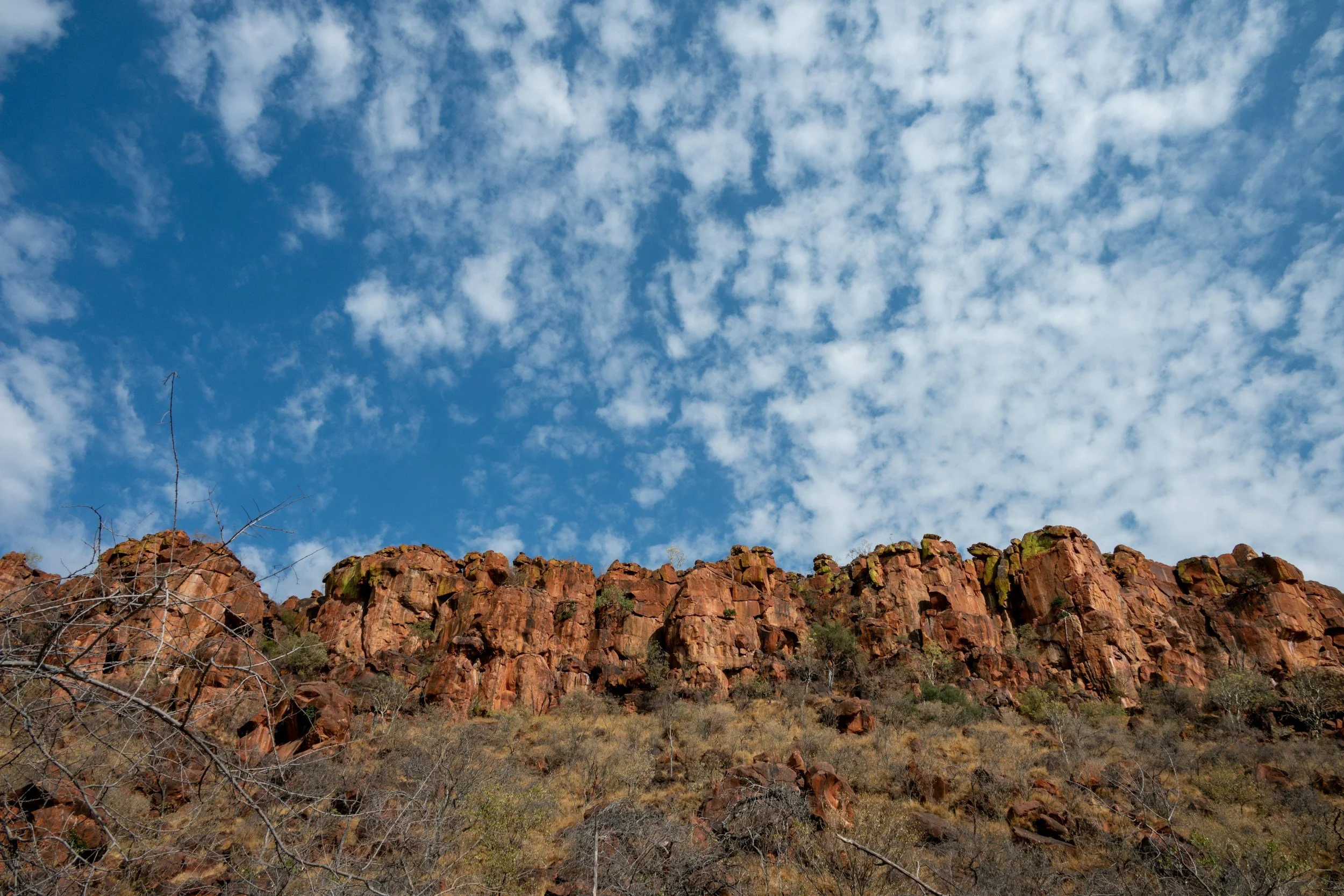
Waterberg Plateau rises above the surrounding green plains, a striking contrast to the deserts and rocky landscapes in the rest of Namibia. The park is home to wildlife like antelope, zebras, rhinos and a variety of birds.
Camping here is peaceful, with plenty of space to set up and explore. There are several hiking trails that let you wander through the park, take in the views over the plains and spot animals along the way. There’s options to do guided rhino trackings or drives too. But even a short walk gives a real sense of the area’s beauty and Namibia’s diversity.
Campsite: Waterberg Wilderness Andersson Campsite
Okonjima
Okonjima is a private nature reserve run by the AfriCat Foundation, an organisation dedicated to the protection of wild cats and other endangered species. It’s a place where conservation and travel come together in the best way.
The reserve feels green and alive, with plenty of wildlife moving through the landscape. Short walking trails make it easy to explore the area on foot, and even a simple walk around camp can turn into a wildlife encounter.
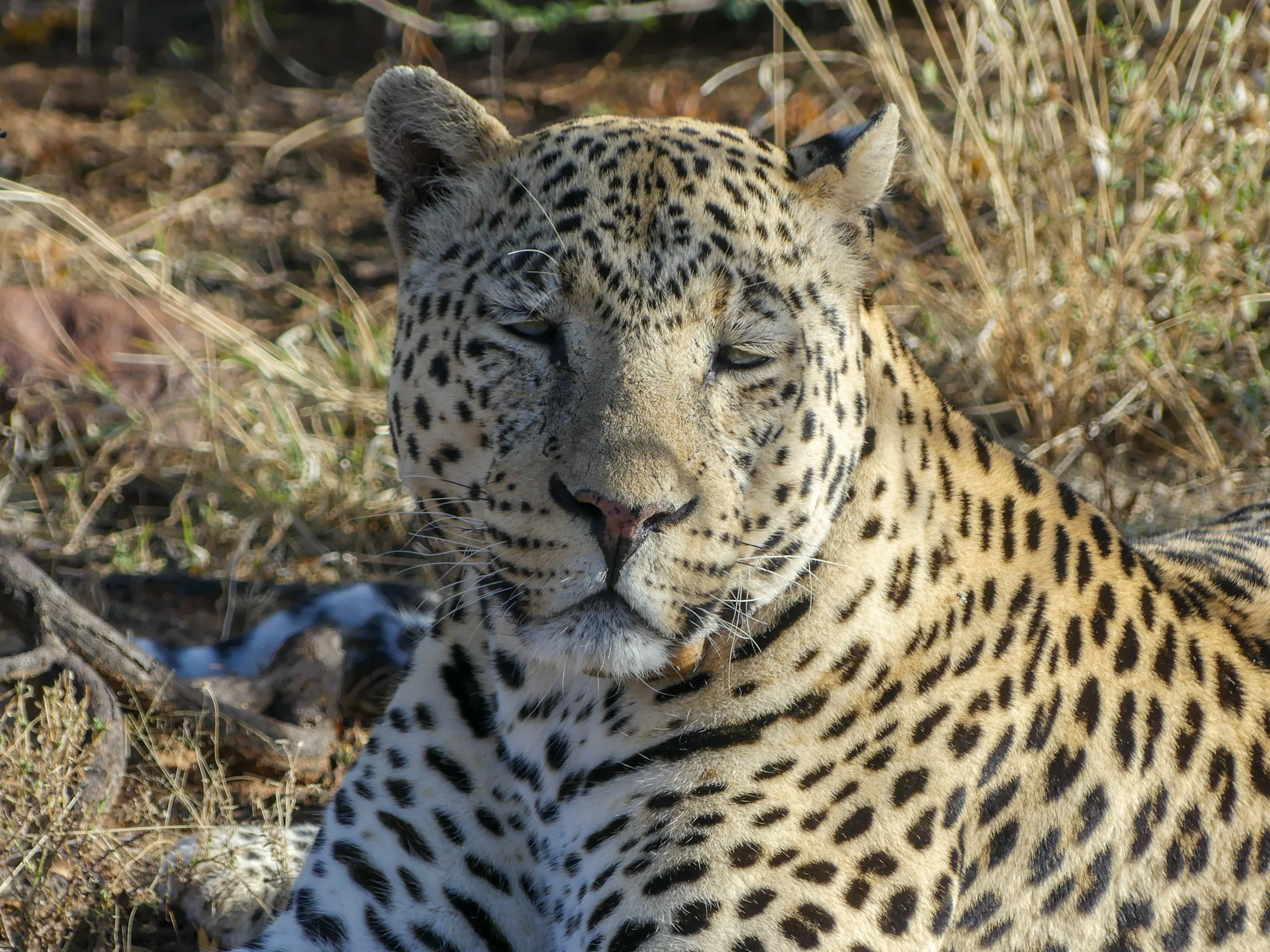
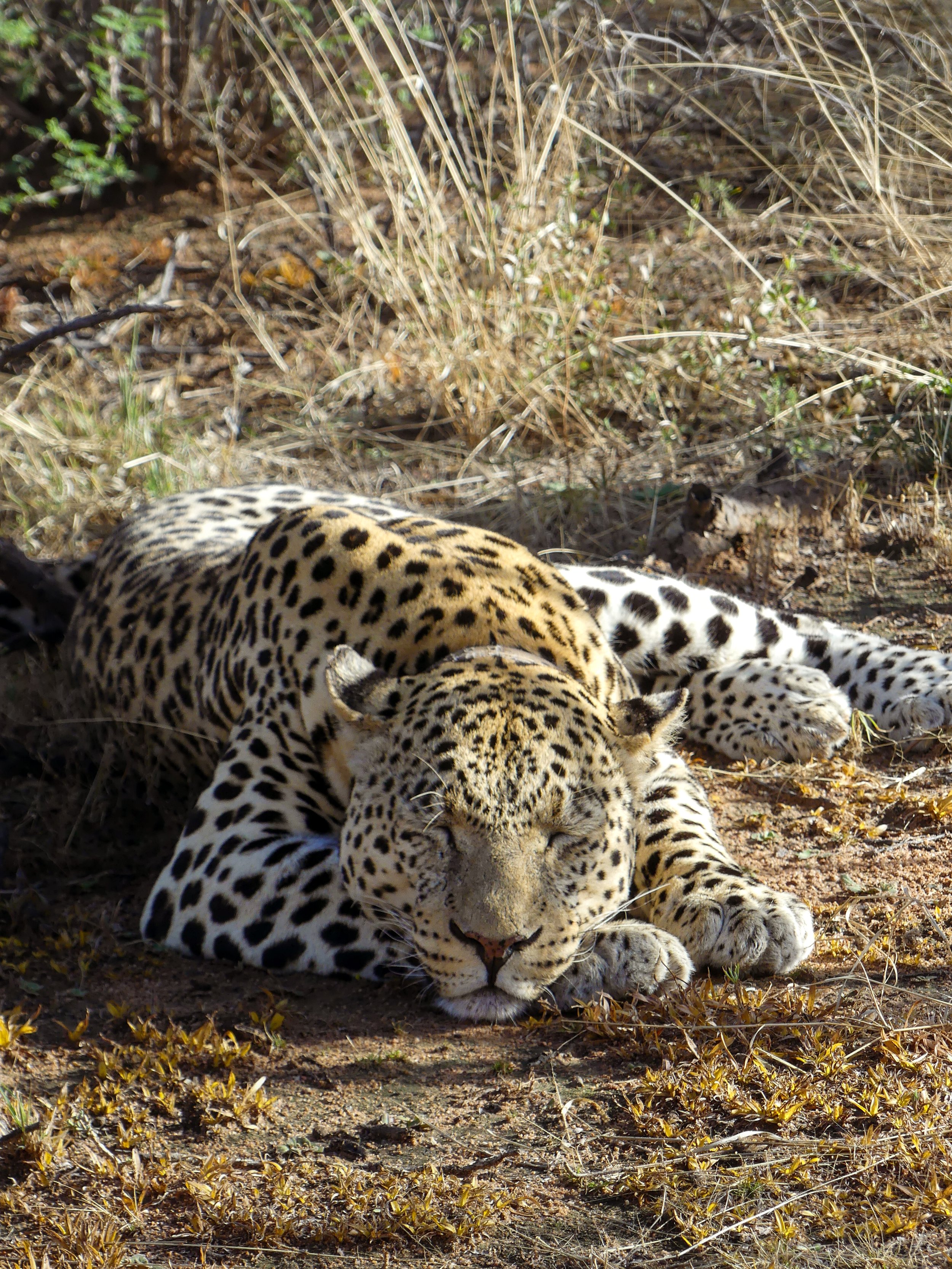
One of the highlights of Okonjima is joining a guided leopard tracking activity. The leopards are monitored as part of ongoing research, using VHF radio collars that allow guides to track their movements. It’s a unique experience that feels very pure, focused on understanding the animal rather than chasing a sighting. Seeing a leopard up close, relaxed in its natural habitat, is something you won’t forget.
Okonjima is a meaningful stop towards the end of your Namibia journey. A place to slow down, learn more about conservation, and reflect on everything you’ve experienced before heading back to Windhoek.
Campsite: Okonjima Campsites
Don’t miss
A Leopard tracking
Joining a guided leopard tracking drive is one of the most special experiences at Okonjima. The leopards are monitored for research using VHF radio collars, allowing guides to track their movements without disturbing them. Following the signals through the reserve and eventually (if you’re lucky of course) spotting a leopard resting in the shade is unforgettable. The trackings leave in the early morning or in the afternoon and can be book at the lodge reception.