All you need to know:
Namibia
Namibia is a country where a little preparation goes a long way. Before our trip, I spent hours reading blogs, watching videos and making lists, trying to figure out what we actually needed to know. Looking back, these are the tips that made the biggest difference during our adventure.
Hopefully they'll help make your road trip just a little smoother too.
Book campsites in advance
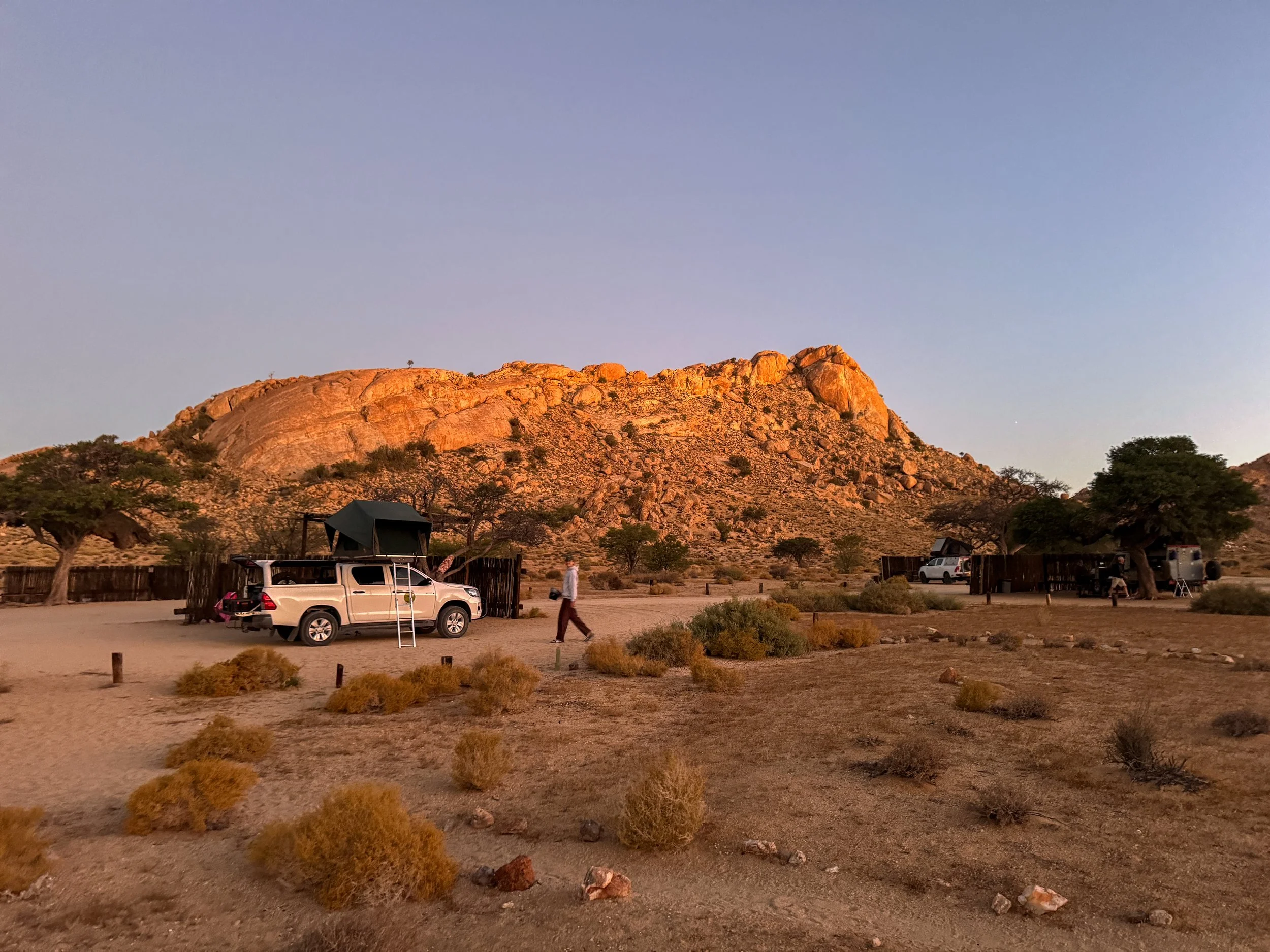
One thing that surprised us is that some campsites are actually quite small. Especially in the more remote areas, there often aren't many alternatives nearby, so if a campsite is full, your next option might be hours away.
If you're travelling during peak season (but also just in general), I'd definitely recommend booking your campsites in advance. It gave us so much peace of mind knowing we had a place waiting for us after a long day on the road.
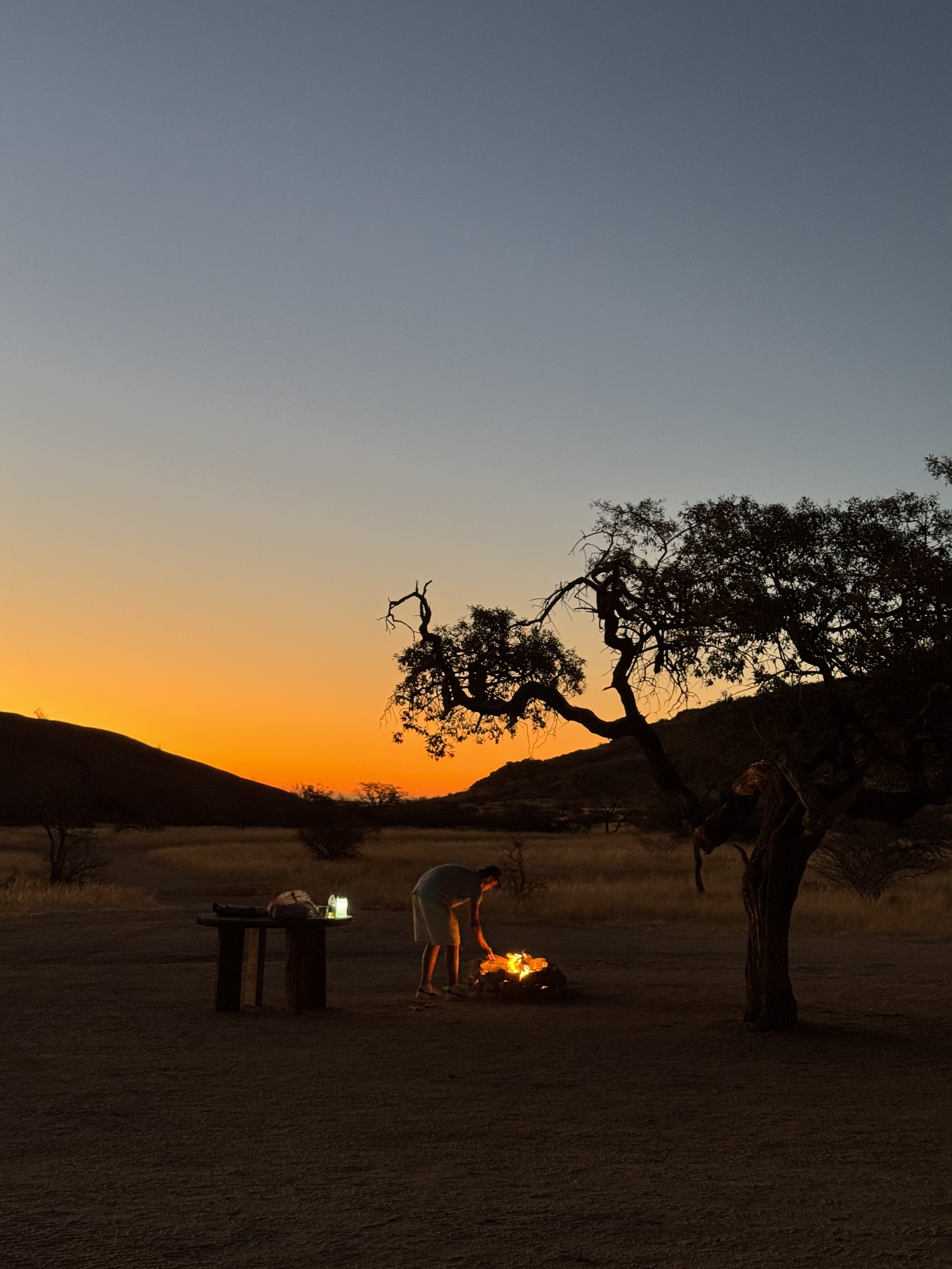
Not every campsite has electricity
Some of our favourite campsites had no electricity at all. They felt remote, peaceful and somehow made the whole adventure feel even more special.
That said, it's something to keep in mind if you're travelling with a rooftop tent and a fridge like we did. Our fridge charged while we were driving, but once we parked and started setting up camp, it needed to stay connected to keep cooling. It keeps its temperature surprisingly well, but remember: you're camping in the Namibian heat.
A little tip from experience: I wouldn't stock your fridge with lots of food that spoils quickly right before staying at a campsite without electricity. It would be such a shame to have to throw good food away.
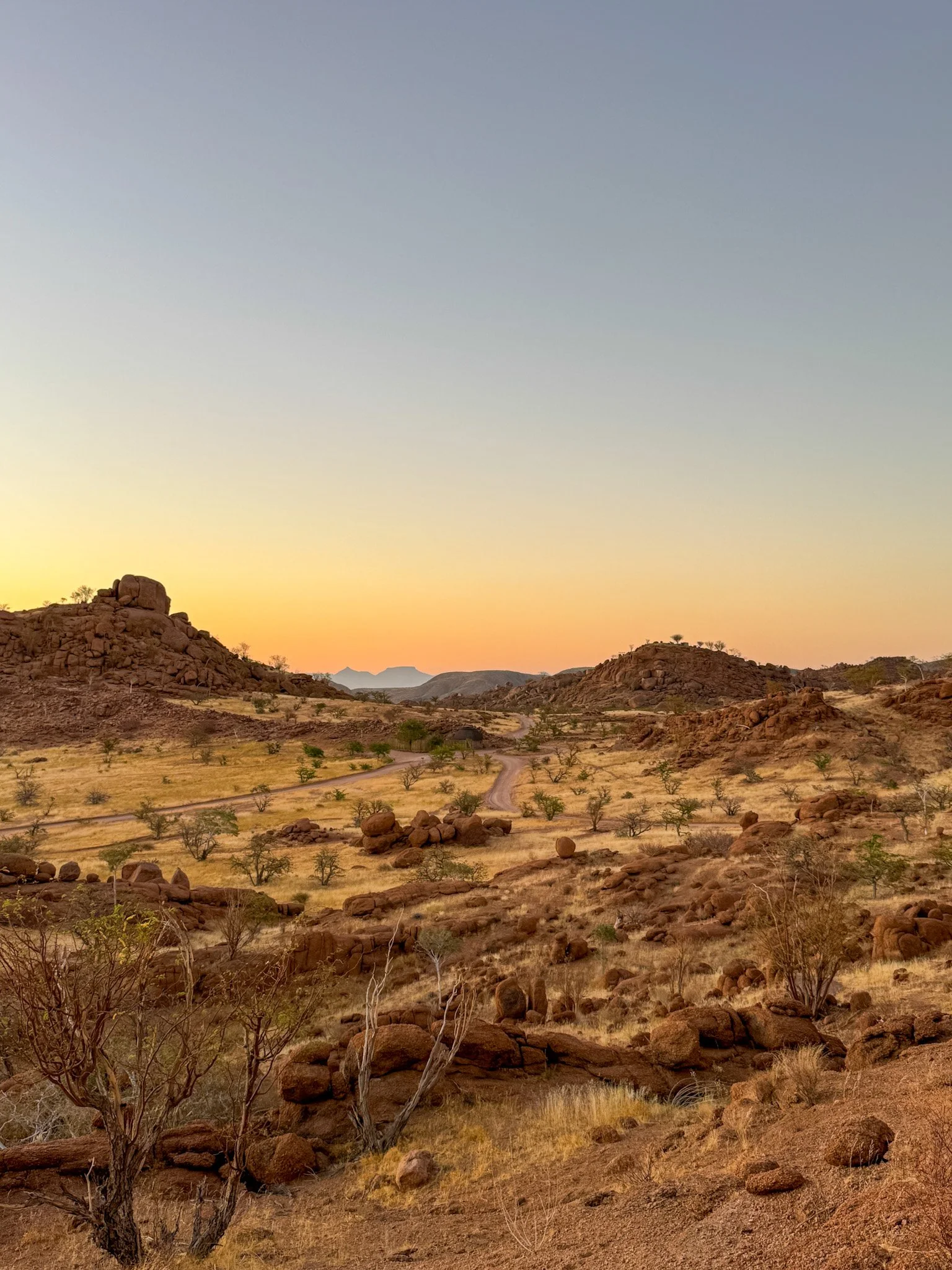
Some of the campsites where we didn't have electricity were: Aus, Naukluft, Spitzkoppe, Hoada, Waterberg. But honestly? They ended up being some of our favourites.
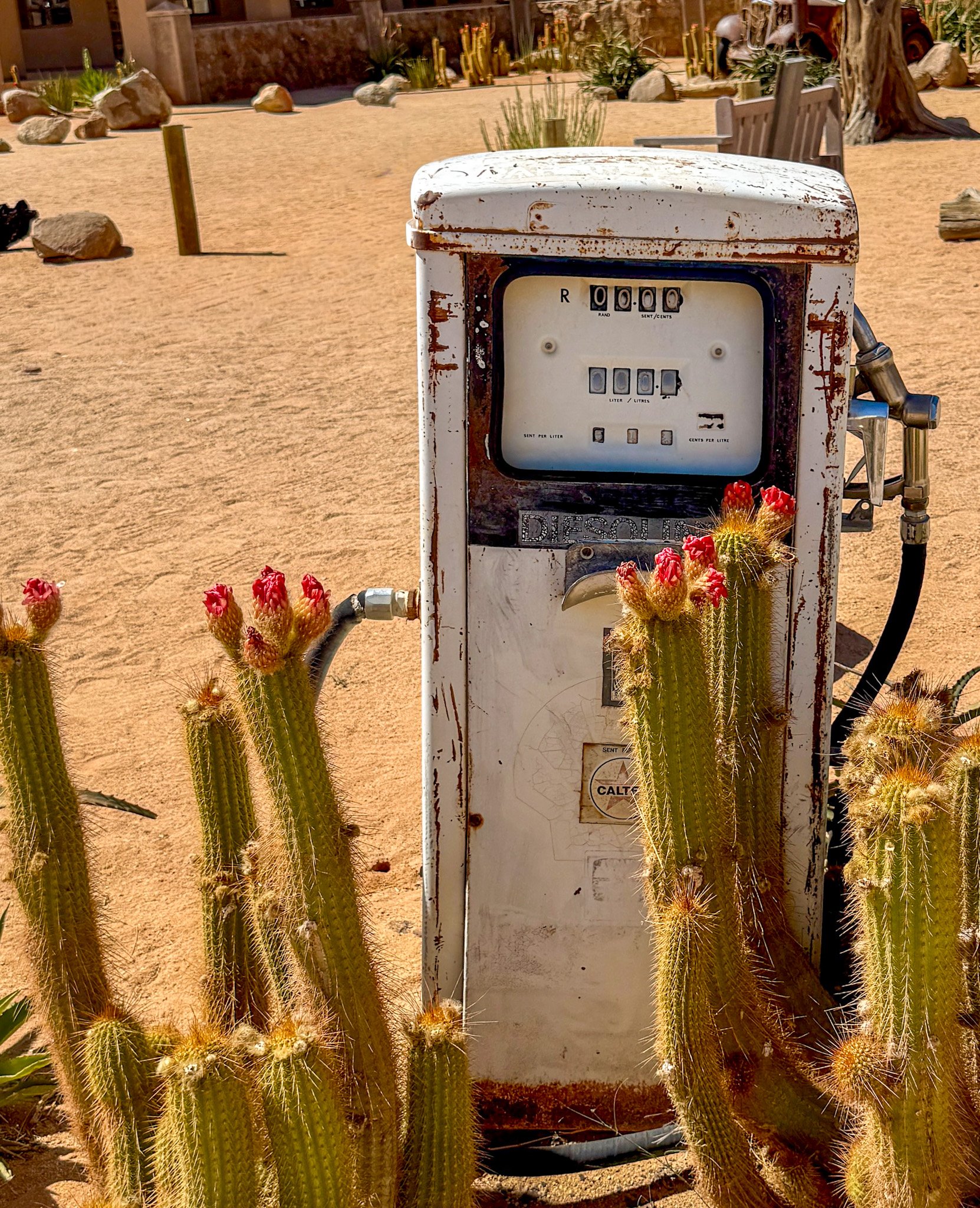
Fill up your tank whenever you can
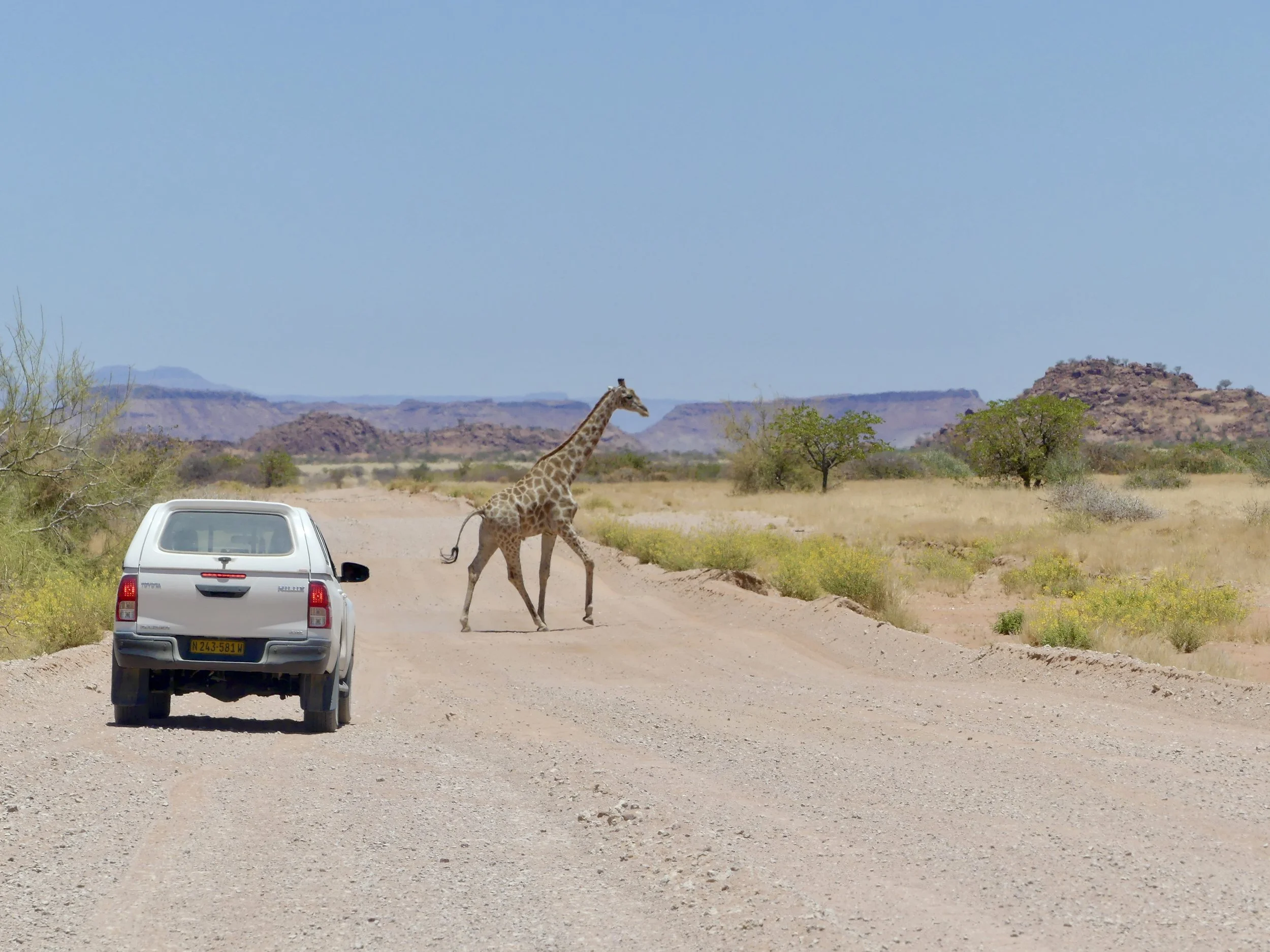
People often ask if fuel is difficult to find in Namibia. And Honestly? We never felt stressed about running out.
Fuel stations are simply more spread out than you might be used to. Our rule quickly became very simple: If there's a fuel station, fill up.
It only takes a few extra minutes and saves you from constantly checking your fuel gauge. If you know you have a particularly long driving day ahead, it's worth checking beforehand where the next fuel stop will be.
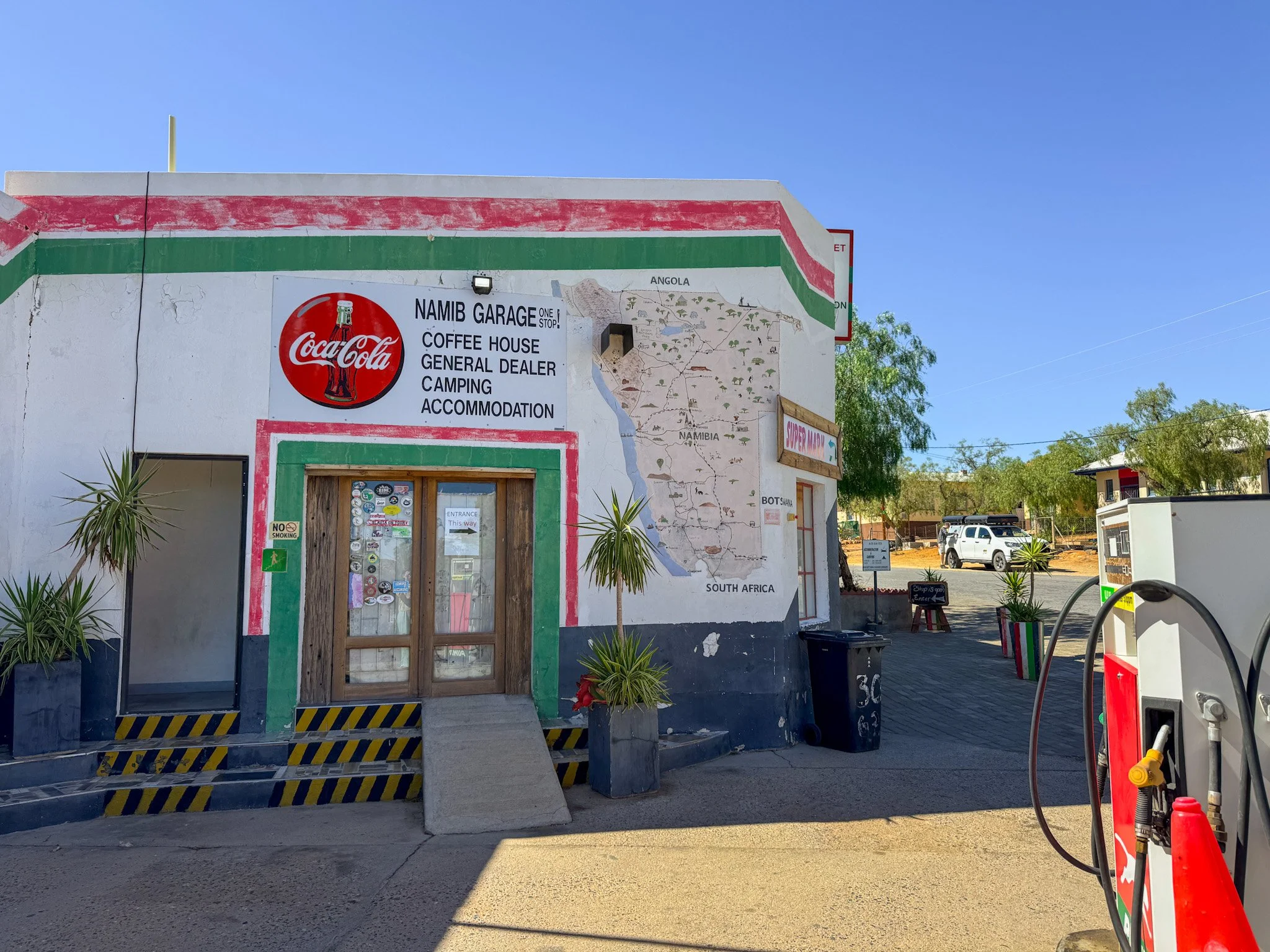
Stock up on groceries in the bigger cities
Windhoek and Swakopmund have large supermarkets where you'll find pretty much everything you need.While you’re there, take the opportunity to properly stock up before heading into the more remote parts of the country.
Along the way you'll still find smaller supermarkets in many towns, and quite a few campsites also sell braai (BBQ) packs, meat and some basic essentials.
another thing you should always make sure you have enough of is water. We got into the habit of stocking up for a couple of days whenever we had the chance. You never know what might happen along the way, and it's one of those things you'll be glad to have extra of. With the Namibian heat, you'll probably end up drinking more than you expect anyway.
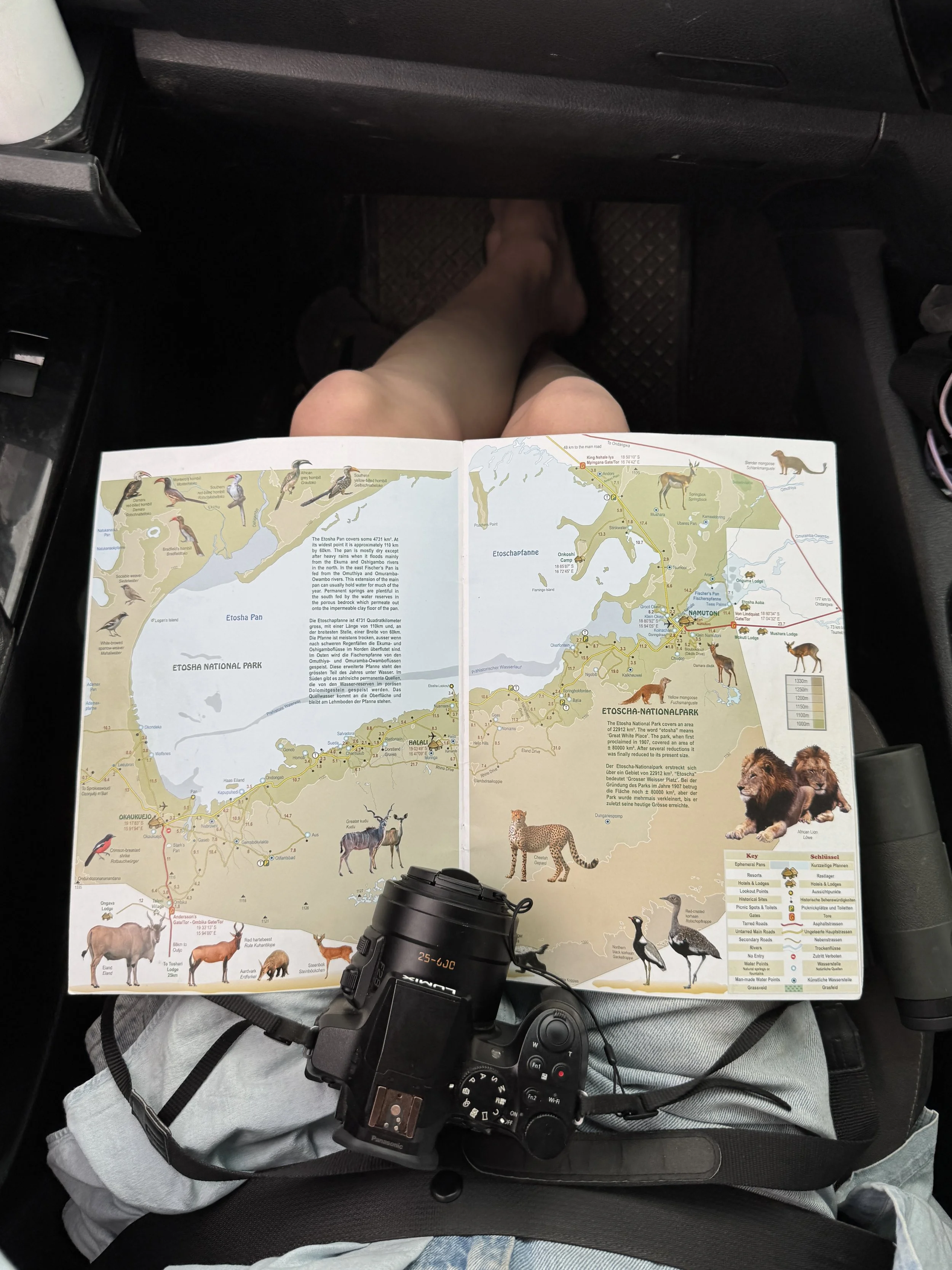
Download your maps before you leave
We bought a local SIM card at the airport, which worked great for navigation and checking things on the go. But reception isn't available everywhere, and honestly, that's part of the beauty of travelling through Namibia.
Before leaving each morning, we'd simply download our route offline. Luckily, the roads are generally very straightforward, so navigating is much easier than you might expect.
Some campsites offer WiFi around the reception area, but having WiFi at your actual campsite is definitely the exception rather than the rule.
Is Namibia safe?
This was probably one of the questions I received most before our trip. Personally, Namibia felt incredibly safe. We met so many kind, welcoming people and always felt comfortable while travelling around the country. Like anywhere in the world, it's simply about using common sense.
In Windhoek, it's generally recommended not to walk around alone after dark. If you're going out for dinner, simply grab a taxi back to your accommodation. We used LEFA, which is basically Namibia's version of Uber, or asked our accommodation or restaurant to arrange a trusted driver.
A few other small things we always kept in mind:
Don't leave valuables visible inside your car.
Lock your vehicle whenever you leave it.
Don't pick up hitchhikers
Cash or card?
Most restaurants, supermarkets, and accommodation accept card payments.
Still, I'd recommend carrying a bit of cash, especially when travelling into more remote areas where card machines aren't always available.
Tipping is also very common in Namibia and genuinely appreciated by guides, campsite staff and restaurant employees. You'll also notice that at many parking areas, especially in towns and cities, there are attendants who keep an eye on your car while you're away. It's customary to give them a small tip when you return, so having a few small notes or coins on hand is always useful.
Don’t forget to bring
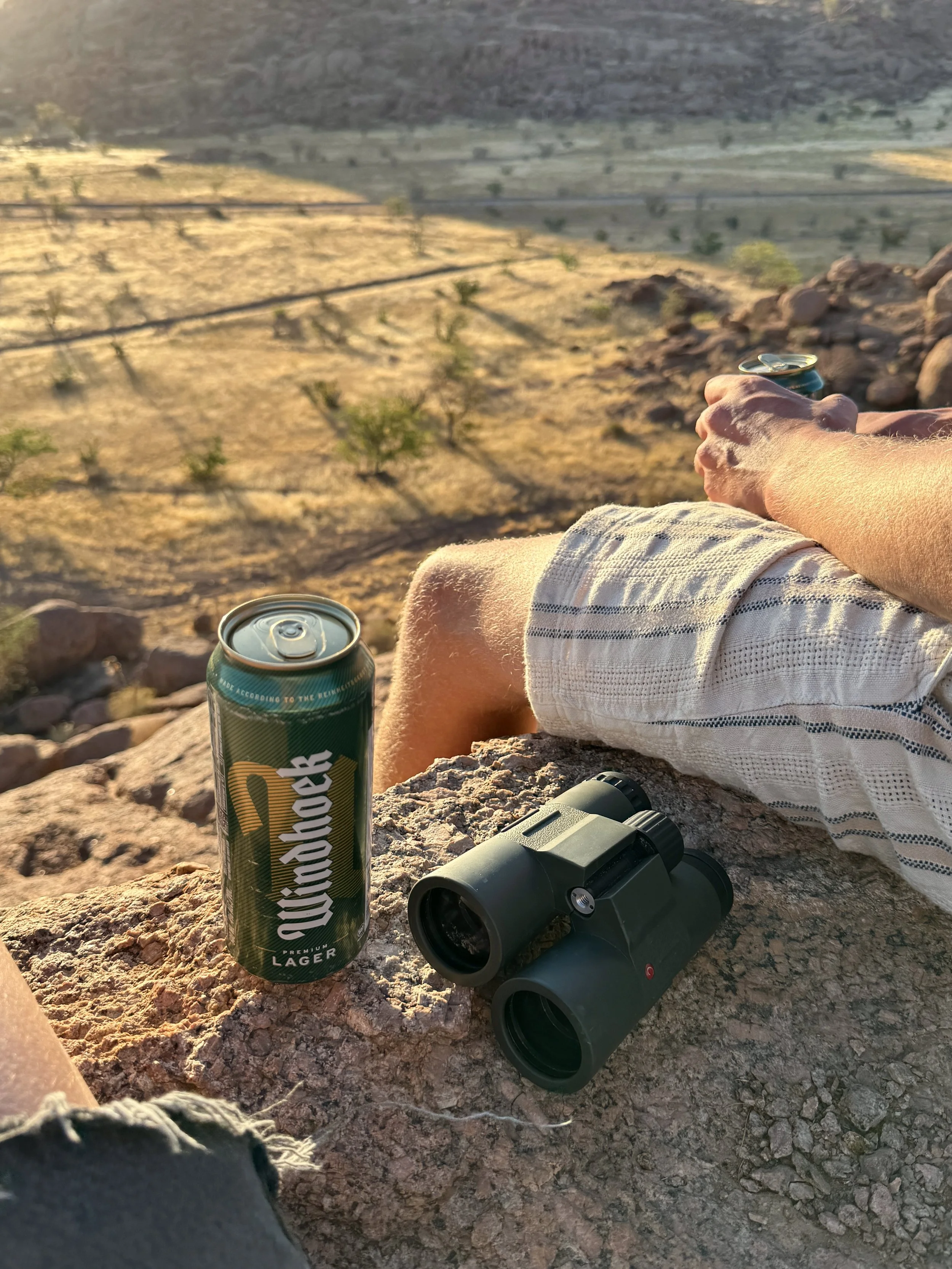
Good binoculars (you'll use them far more than you expect)
A camera (trust me, you'll want one)
Mosquito spray
A good headlamp
A quick-dry towel
A hat or cap for the sun
Enough sunscreen
An international driving permit
A power bank
The right travel plug adapter (Type M)
Games for relaxed evenings at the campsite
A downloaded ( long) road trip playlist
A warm jumper or jacket for chilly evenings
A rain poncho (when travelling in the wet season)
A reusable water bottle